
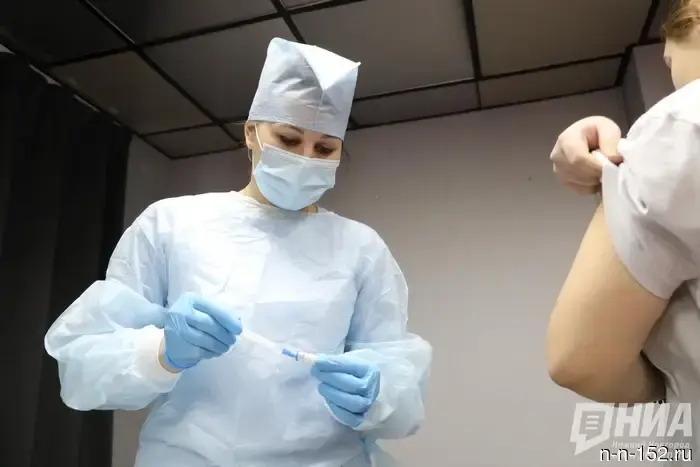
Nizhny Novgorod residents were warned about the consequences of refusing vaccinations.
Immunoprophylaxis remains one of the fundamental strategies for maintaining public health. It is thanks to mass vaccination that humanity has been able to significantly reduce the spread of dangerous infections, and some of them have been practically eliminated from everyday medical practice. Leading consultant on infectious diseases in the adult population healthcare department of the Ministry of Health of the Nizhny Novgorod region, Lyudmila Bashkatova, explained how this system works and why it is still critically important.
Immunity as a line of defense
The immune system is a complex mechanism that directly affects the body's resistance to infections. Its state is influenced by a whole range of factors: chronic stress, unbalanced nutrition, lack of sleep, excessive or, conversely, insufficient physical activity. Harmful habits and refusal of preventive vaccinations cause significant damage.
Vaccination plays a special role in this system. It not only forms individual protection but also creates so-called herd immunity, which prevents the spread of infections in society. This mechanism is especially important for protecting people who cannot be vaccinated for medical reasons.
Why vaccines work
Modern vaccines allow us to "train" the immune system in advance. After the administration of the vaccine, the body produces antibodies capable of quickly recognizing and neutralizing the pathogen upon actual encounter. As a result, the disease either does not develop at all or occurs in a significantly milder form.
Vaccines themselves are preparations created based on weakened or inactivated microorganisms, or their individual components. Depending on the production technology, live and inactivated vaccines are distinguished. The former form a longer-lasting immunity, while the latter are considered gentler and are widely used against a number of infections.
It is important that all vaccine preparations undergo long clinical trials before being included in practice. Their safety and efficacy are tested over many years. Side effects are generally limited to short-term and mild manifestations—such as a slight increase in temperature or a local reaction at the injection site—and are incomparable to the risks of the infectious diseases themselves.
Results already achieved
The history of vaccination is primarily a history of victories over diseases. Thanks to vaccinations, smallpox has been completely eradicated. There is no circulation of poliovirus in Russia, and infections such as diphtheria and tetanus are extremely rare. The incidence of measles and several other infections has also significantly decreased.
However, the preservation of these results directly depends on the level of vaccination coverage in the population. The World Health Organization recommends maintaining this indicator at no less than 95%. A decrease in the level of immunization increases the risk of the return of previously controlled infections.
National calendar: how the system works
In Russia, vaccination is carried out within the framework of the National Calendar of Preventive Vaccinations. This document defines the list of mandatory vaccinations and the timing of their administration. In the absence of contraindications, they must be performed for all citizens.
The mandatory part of the calendar includes vaccinations against 11 infections, including tuberculosis, hepatitis B, diphtheria, whooping cough, tetanus, poliomyelitis, measles, rubella, epidemic mumps, hemophilic infection, and influenza (for certain population groups). In addition, vaccination is provided for epidemic indications against a number of diseases—from tick-borne encephalitis to cholera.
In total, today there are vaccines available for more than 20 dangerous infections, which significantly increases the duration and quality of life of the population.
Risk groups and current issues
Particular attention is paid to high-risk groups. These include elderly people and patients with chronic diseases. For them, protection against pneumococcal infection, which can lead to severe complications, is especially important.
At the same time, specialists note an increase in the number of refusals of vaccination, including among parents of young children. This position, emphasizes Lyudmila Bashkatova, poses a direct threat to the child's health. In addition, the absence of vaccinations may lead to restrictions when attending educational institutions during periods of unfavorable epidemiological situations.
A separate practical point concerns the timing of vaccinations: it is recommended to complete vaccinations in advance—several months before the child enters a group setting. The adaptation period is often accompanied by frequent colds, which can lead to a shift in the immunization schedule.
Since 2025, by order of the President of the Russian Federation Vladimir Putin, a national project "Long and Active Life" is being implemented. The goals of this project are aimed at conducting preventive medical examinations and dispensarization. In turn, the national project "Long and Active Life" is aimed at the expected increase in life expectancy by 2030 and involves the modernization of clinics, outpatient clinics, and rural health posts, attracting qualified medical personnel to medical institutions, applying new approaches in prevention, diagnosis, and treatment of chronic diseases, improving emergency medical care and rehabilitation systems, developing a network of national research centers, and digitizing the industry.
The NIA "Nizhny Novgorod" has a Telegram channel. Subscribe to stay updated on major events, exclusive materials, and operational information. Copyright © 1999—2025 NIA "Nizhny Novgorod". When reprinting, a hyperlink to NIA "Nizhny Novgorod" is mandatory. This resource may contain materials 18+.
Другие Новости Нижнего (Н-Н-152)
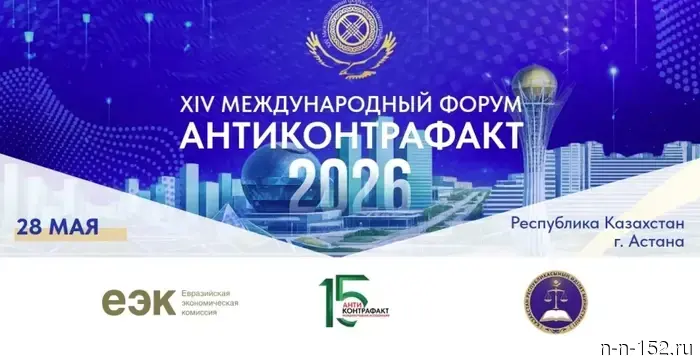 Participate in the XIV International Forum "Anti-Counterfeiting-2026"
On May 28, 2026, in the city of Astana (Republic of Kazakhstan), with the support of the Eurasian Economic Commission, the XIV International Forum "Anti-Counterfeit-2026" (hereinafter referred to as the Forum) will take place, 04.20.2026. Varnavinsky Municipal District. Nizhny Novgorod Region. Varnavino.
Participate in the XIV International Forum "Anti-Counterfeiting-2026"
On May 28, 2026, in the city of Astana (Republic of Kazakhstan), with the support of the Eurasian Economic Commission, the XIV International Forum "Anti-Counterfeit-2026" (hereinafter referred to as the Forum) will take place, 04.20.2026. Varnavinsky Municipal District. Nizhny Novgorod Region. Varnavino.
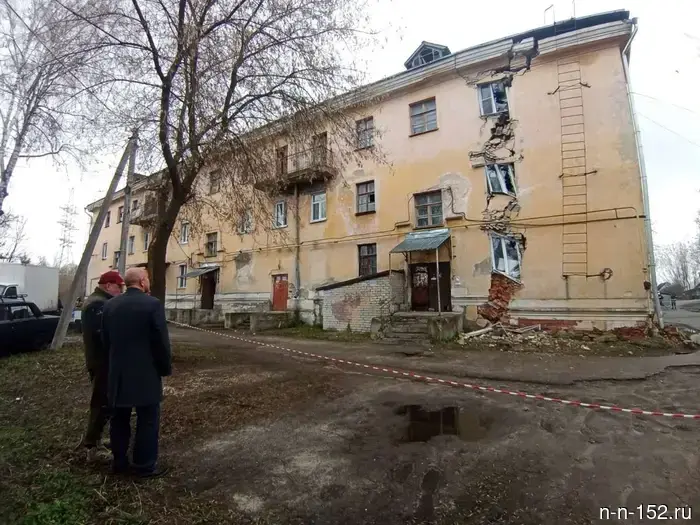 The head of Balakhna denied rumors about relocating residents of the cracked house to barracks.
News of Nizhny Novgorod
In Dzerzhinsk, police have identified a suspect in the theft of perfume from a cosmetics store.
In early April, the director of one of the cosmetic stores contacted the duty unit of Police Department No. 1 of the Ministry of Internal Affairs of Russia for the city of Dzerzhinsk. 20.04.2026. Main Directorate of the Ministry of Internal Affairs of the Nizhny Novgorod Region. Nizhny Novgorod Region. Nizhny Novgorod.
The head of Balakhna denied rumors about relocating residents of the cracked house to barracks.
News of Nizhny Novgorod
In Dzerzhinsk, police have identified a suspect in the theft of perfume from a cosmetics store.
In early April, the director of one of the cosmetic stores contacted the duty unit of Police Department No. 1 of the Ministry of Internal Affairs of Russia for the city of Dzerzhinsk. 20.04.2026. Main Directorate of the Ministry of Internal Affairs of the Nizhny Novgorod Region. Nizhny Novgorod Region. Nizhny Novgorod.
 Those accused of espionage in Odessa are being attempted to be returned to their homeland.
News of Nizhny Novgorod
Those accused of espionage in Odessa are being attempted to be returned to their homeland.
News of Nizhny Novgorod
 The roads of Nizhny Novgorod have begun to be treated for ice.
News of Nizhny Novgorod
The roads of Nizhny Novgorod have begun to be treated for ice.
News of Nizhny Novgorod
Nizhny Novgorod residents were warned about the consequences of refusing vaccinations.
News of Nizhny Novgorod