
They trampled the sands of Baikonur: revelations from Nizhny Novgorod veterans of the cosmodrome.
NIA "Nizhny Novgorod" - Maria Orlova
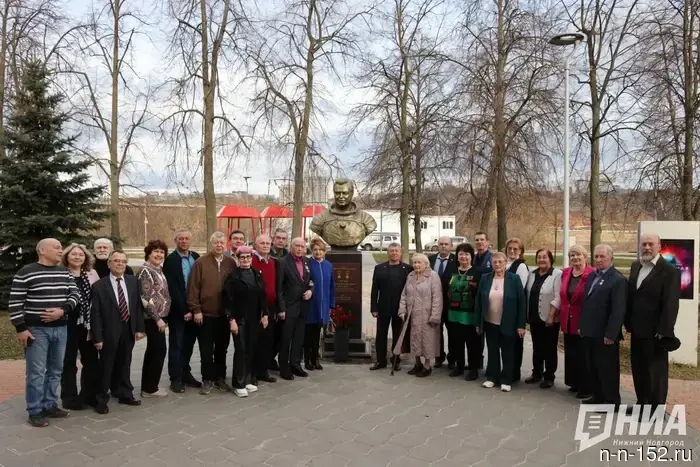
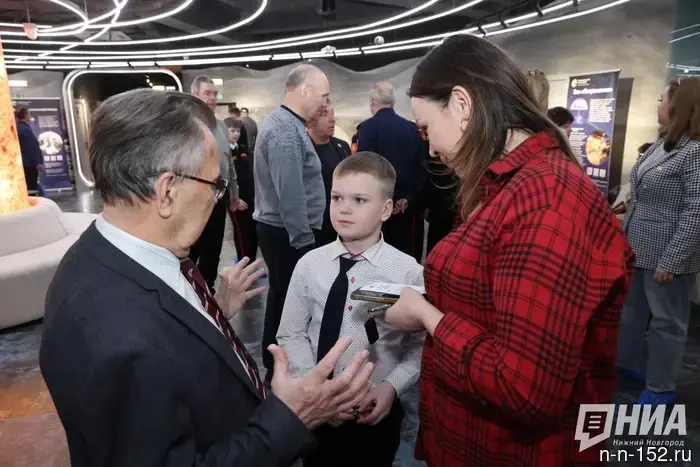
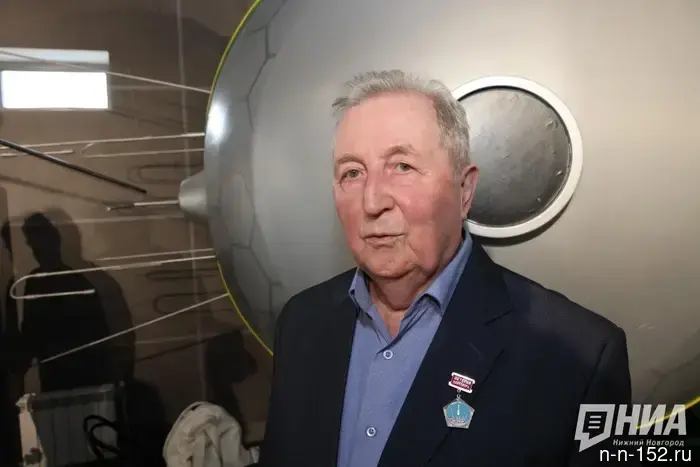
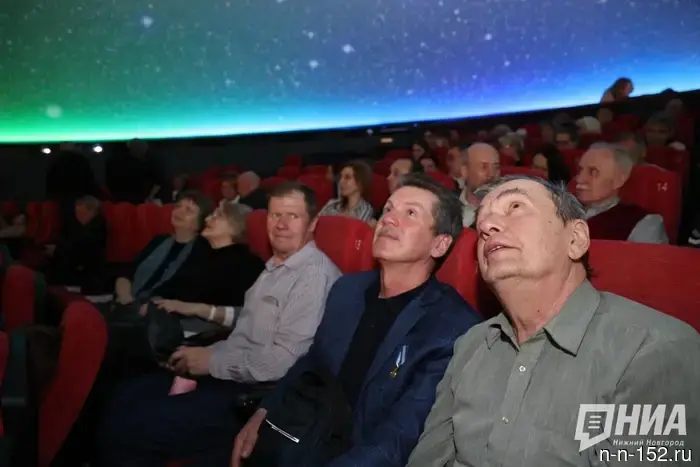
On the eve of Cosmonautics Day, people whose fates are inextricably linked to the Baikonur cosmodrome gathered at the Nizhny Novgorod planetarium. Thanks to their work, rockets and the first artificial satellites of Earth were launched into space. They witnessed loud victories and tragic pages of Soviet cosmonautics. A correspondent from NIA "Nizhny Novgorod" spoke with several participants of the meeting.
From lieutenant to regiment commander
The head of the regional veterans' organization "Baikonur," reserve colonel Valery Khachatryan, worked at the cosmodrome for 34 years, 25 of which were in the Armed Forces, rising from lieutenant to colonel and commander of a missile regiment. He participated in the "Energia" and "Energia - Buran" space programs and was part of the combat crew of measuring point No. 2 during the launch of the reusable system. Later, he worked in Roscosmos structures and from 2017 to 2020 held the position of director of the state corporation's branch in Baikonur.
He arrived at "Baikonur" in July 1986 after graduating from the RVSN military school. He admits that young officers knew almost nothing about their place of service. "At the mandate commission, I was told that I was assigned to military unit 34005, station Tyuratam. After leaving there, my classmates and I went to look for officers who could tell us anything about what kind of military unit it was and where it was located. Baikonur was then shrouded in secrecy. We were told: when you arrive, you will find out everything," he recalls.
He remembers his first impressions with a smile. The young officers arrived in a scorched steppe at temperatures over +50 degrees in parade uniforms with long sleeves, in tunics, ties, and chrome boots. According to him, the military units were located tens of kilometers from the city — at a distance of 50-70 km. Every day, officers commuted to work by motor train: about 80 km one way and the same back. During special operations, they could stay on site for days.
Valery Vladimirovich admits that while serving at "Baikonur," he did not get to meet cosmonauts. After leaving for "civilian life," in Roscosmos, Khachatryan participated in the work of state commissions for conducting flight tests of manned complexes. "We worked directly with the cosmonauts. We participated in the boarding of cosmonauts into the ship. We were practically the last ones waving goodbye to them," he recalls, adding that all this took place at the Gagarin launch site.
At "Baikonur," he also found personal happiness. In 1992, he met his future wife, and a year later, their daughter was born.
Drafted against his will
The "elder" of the regional veterans' organization "Baikonur" is engineer Evgeny Zhulin. He was drafted to Baikonur in 1962. He admits that at first, he did not want to go, and when he was called to the military enlistment office and offered to go to the cosmodrome, he refused. "In 1961, I graduated from our polytechnic institute and was assigned to work in Kuibyshev (Samara). I got married, and we were given a room in a communal apartment — a rarity at that time," he recalls.
But on April 4, an order from the Minister of Defense was issued: to confer the rank of lieutenant and draft him. Thus, Zhulin ended up at Baikonur. He arrived there shortly after the first space launches. The city then resembled a wooden settlement: three or four three-story houses, a wooden Officers' House, an unfinished hotel, and delivered water.
He served in units engaged in testing rocket technology. He ended up at the launch pad where, a year and a half earlier, an explosion occurred during preparations for the first test launch of an intercontinental ballistic missile. "The smell of heptyl was still present. First, they turned on the ventilation, then we went in," he recalls. He says he met cosmonauts who came to the Officers' House after launches. However, he himself did not dream of flying into space. He understood how hard the work was and what health requirements were imposed.
Zhulin served at the cosmodrome until 1989. He was awarded the Medal for Labor Distinction, the Order of the Patriotic War, and the Order of the Red Banner of Labor. Almost no veterans of that generation remain. "I am the oldest," Zhulin notes. According to him, current employees of the cosmodrome work under different conditions — with developed infrastructure and good provision.
Secret destination
Dmitry Panin arrived at Baikonur, as he says, exactly on the tenth anniversary of Yuri Gagarin's flight — April 1, 1971. A graduate of the Kazan Aviation Institute was sent there by the Ministry of Defense. At the cosmodrome, Panin was appointed an engineer at the TRAL telemetry station. Until the last moment, Panin did not know exactly where he was being sent. "The Ministry of Defense issued documents — arrive at military unit 11284. We arrived, were met by a patrol, and taken to headquarters. The next day, the chief of staff said: you have arrived at the Baikonur cosmodrome. Our jaws dropped," he recalls.
According to him, at that time, information about the place of service was not disclosed in advance due to strict secrecy. Censorship of correspondence was in effect, and many things were prohibited from being written even in letters home. He served at launch pad 31, where satellites were launched and spacecraft were prepared. "Now I am very proud that manned launches have completely transitioned here," he noted.
During his two years of service, Panin witnessed several dramatic events. He recalls the death of the crew of Dobrovolsky, Volkov, and Patsayev, as well as the testing of the super-heavy rocket N-1, which was created for the lunar program under the leadership of Sergei Korolev. He observed one of its launches from a distance of about three kilometers. According to the veteran, the launch mass was about 3000 tons, the height was about 100 meters, and the diameter at the bottom was about 27 meters.
When the veterans' organization was created in 1998, Panin became one of its participants. At the first meeting, he saw an officer who, during his service, came to supervise telemetry work — Colonel Valery Andronov. According to the veteran, he served at Baikonur since 1958, participated in ensuring Gagarin's launch, and personally saw Sergei Korolev. "He recognized me. He said: 'I remember you came,'" shared Dmitry Panin.
The cosmodrome as destiny
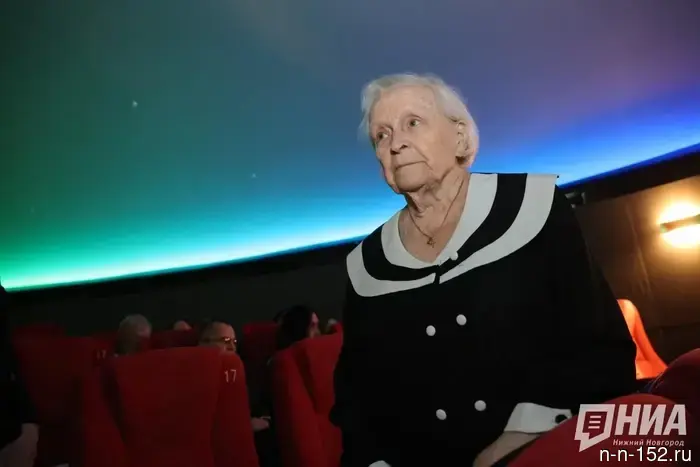
Galina Tolstykh lived at "Baikonur" for 30 years. She went to the cosmodrome with her husband — a graduate of the Perm Command and Engineering School, Alexander — in 1968. He served as the head of the laboratory and participated in work on the "Proton" and "Energia" rockets, including during the preparation for the launch of "Energia" with "Buran," in ensuring the launches of spacecraft for lunar and Martian programs, as well as launches of spacecraft to Venus. She herself taught at the branch of the Moscow aviation university.
The woman recalls how, in the early years, she witnessed the unsuccessful launch of the N-1: the explosion was so powerful that the shockwave nearly knocked people off their feet. The 1990s were also difficult when the cosmodrome found itself in a challenging situation, and many families were forced to leave. At that time, Alexander Tolstykh became the deputy head of the administration of Leninsk (now Baikonur). "Someone had to restore order," the woman added.
Next to Galina Tolstykh sits her daughter Galina Muromtseva. She was two years old when her parents went to the cosmodrome. Although she is a musician by education (she graduated from the conservatory), fate still connected her with space. Today she is the director of the Nizhny Novgorod planetarium. According to her, life in the space city left vivid memories. Baikonur was very different from the mainland. Before the launch of cosmonauts, they were traditionally driven through the central street — residents came out to greet them. Children ran to watch rocket launches in the steppe. "In the city, doors were not locked; everyone knew each other. People were united by a sense of detachment and a common cause," notes the interlocutor of NIA "Nizhny Novgorod."
For the participants of the meeting, Baikonur is not just a place of service. It is a city where families were created, children were born, and events occurred that defined the history of the country. And today, decades later, they continue to gather together to preserve the memory of the time when they "treaded the sands of Baikonur" and sent rockets into space. Earlier, the planetarium reported on the contribution of the Nizhny Novgorod region to the exploration of space. NIA "Nizhny Novgorod" has a Telegram channel. Subscribe to stay updated on major events, exclusive materials, and operational information
Другие Новости Нижнего (Н-Н-152)
 Mushrooms will start appearing in the forests of the Nizhny Novgorod region as early as April.
News of Nizhny Novgorod
Mushrooms will start appearing in the forests of the Nizhny Novgorod region as early as April.
News of Nizhny Novgorod
 Mushrooms will start appearing in the forests of the Nizhny Novgorod region as early as April.
News of Nizhny Novgorod
Mushrooms will start appearing in the forests of the Nizhny Novgorod region as early as April.
News of Nizhny Novgorod
They trampled the sands of Baikonur: revelations from Nizhny Novgorod veterans of the cosmodrome.
News of Nizhny Novgorod