
Laser metal cleaning: a technology that is increasingly chosen instead of sandblasting and chemicals.
Industrial enterprises are increasingly abandoning traditional methods of cleaning metal surfaces in favor of lasers. A technology that was predominantly available to large manufacturers just a few years ago is now being applied in medium-sized enterprises — during metal preparation for welding, painting, and anti-corrosion treatment.
How laser cleaning works
The method is based on ablation: the contaminating layer absorbs the energy of the laser pulse and evaporates or is destroyed under the impact of a shock wave. A key condition is that the contaminant must absorb radiation more intensely than the base metal. This ensures the selectivity of the process: rust, scale, or paint coatings are removed, while the substrate remains undamaged.
The depth of impact is regulated by the power and frequency of the pulses. In practice, this allows working with sensitive surfaces — for example, removing the oxide layer before spot welding without the risk of damaging the base metal.
The following is removed:
- rust and oxide films on steel and cast iron;
- scale after heat treatment, cutting, welding;
- old paint coatings — layer by layer or completely;
- oil contaminants and technological lubricants before applying coatings.
Comparison with sandblasting and chemical cleaning
Sandblasting provides high productivity on open flat surfaces but creates mechanical loads on the substrate, leaves abrasive particles in the pores of the metal, and requires disposal of used abrasives. Its effectiveness decreases on complex geometric surfaces and in hard-to-reach areas.
Chemical cleaning does not create mechanical loads but requires waiting, neutralization of reagents, and subsequent rinsing. Liquid waste is generated, requiring special disposal. Its application is limited in active production conditions — especially where there is no possibility to equip a zone for working with chemicals.
Laser cleaning does not require consumables. The only waste is fine particulate suspension and vapors, removed by local extraction. The method can be applied directly at the work site: manual systems allow processing structures without disassembly and relocation.
In terms of precision, lasers surpass both alternative methods: the depth of removal is controlled with an accuracy of up to a few microns, which is critical when working with thin-walled parts and critical joints.
When the transition to laser is economically justified
Laser cleaning is not advisable in every scenario. The capital costs for equipment are higher than those of sandblasting installations of comparable performance. This shifts the economics towards regular use.
The transition is justified if:
- cleaning is a recurring operation in the production cycle, not a one-time task;
- high surface quality is required — for example, before laser welding or applying protective coatings;
- work is being done with expensive parts, where the risk of damaging the substrate is unacceptable;
- production is limited in space or conditions for working with chemical reagents.
Traditional methods are preferable if:
- the volume of work is one-time or irregular;
- large open structures are processed without precision requirements;
- the budget for equipment is strictly limited.
Equipment
Laser cleaning machines are available in manual versions with fiber lasers ranging from 50 to 3000 W. Power determines productivity and depth of processing; for most rust and scale removal tasks, a range of 100–500 W is sufficient. More powerful systems are used for removing thick paint coatings and intense contaminants.
Typical parameters of such systems can be assessed using the example of the line of laser cleaning machines from Wattsan — a manufacturer officially supplying equipment to the Russian market. A catalog with technical specifications is available at the link: power, working resource, weight, and operating modes of systems of different classes.
Laser cleaning is gradually moving from the category of specialized equipment to the realm of standard production tools. The result depends on the correct selection of power and modes for specific tasks — there is no universal solution, but the range of applicability of the method is significantly broader than commonly believed.
Advertisement. LLC "STANKOPROM". INN 7811692637 wattsan.ru
NIА "Nizhny Novgorod" has a Telegram channel. Subscribe to stay updated on major events, exclusive materials, and operational information. Copyright © 1999—2025 NIА "Nizhny Novgorod". When reprinting, a hyperlink to NIА "Nizhny Novgorod" is mandatory. This resource may contain materials 18+
Другие Новости Нижнего (Н-Н-152)
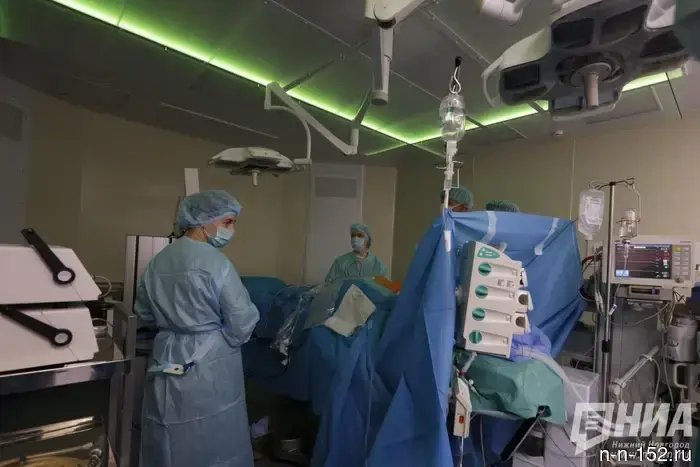 Nizhny Novgorod surgeons removed a cyst the size of an egg from a patient.
News of Nizhny Novgorod
Nizhny Novgorod surgeons removed a cyst the size of an egg from a patient.
News of Nizhny Novgorod
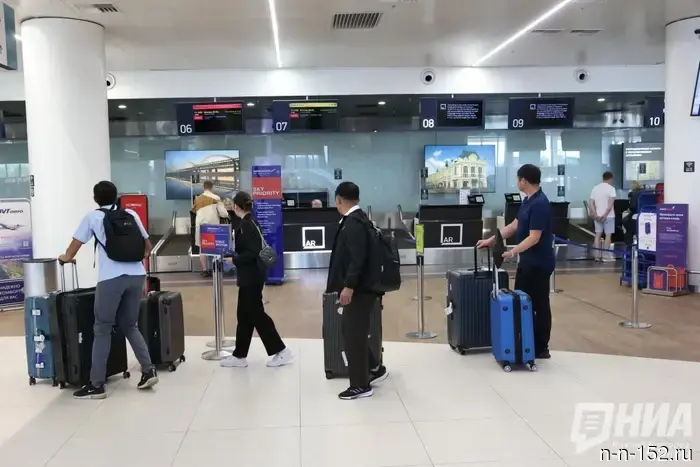 Seven flights have been delayed at the Nizhny Novgorod airport due to the imposed restrictions.
News of Nizhny Novgorod
Seven flights have been delayed at the Nizhny Novgorod airport due to the imposed restrictions.
News of Nizhny Novgorod
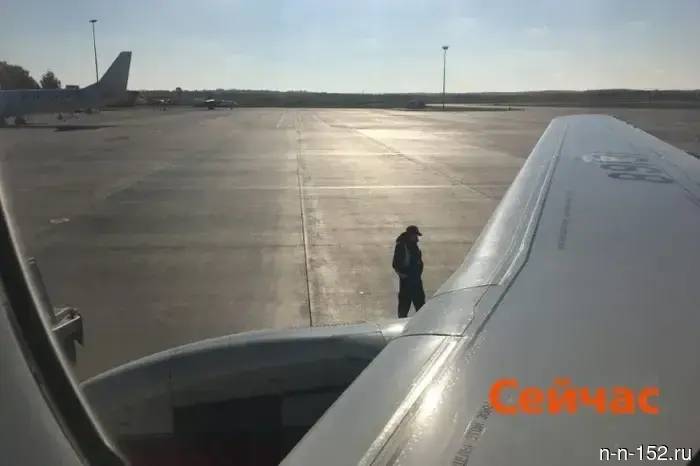 Flights have resumed at the Nizhny Novgorod airport.
Nizhny Novgorod Airport has resumed the departure and arrival of aircraft after the lifting of restrictions. 04/13/2026. Nizhny Now IA. Nizhny Novgorod Region. Nizhny Novgorod.
Flights have resumed at the Nizhny Novgorod airport.
Nizhny Novgorod Airport has resumed the departure and arrival of aircraft after the lifting of restrictions. 04/13/2026. Nizhny Now IA. Nizhny Novgorod Region. Nizhny Novgorod.
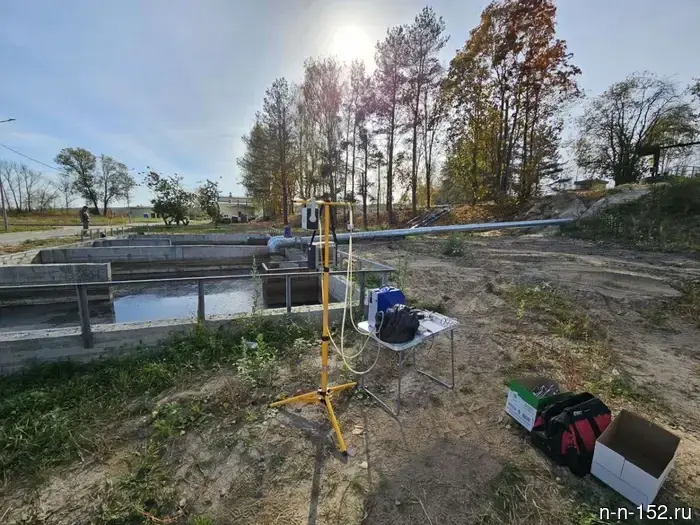 Semenovsky "Gorvodokanal" was fined for failing to eliminate environmental violations.
News of Nizhny Novgorod
Semenovsky "Gorvodokanal" was fined for failing to eliminate environmental violations.
News of Nizhny Novgorod
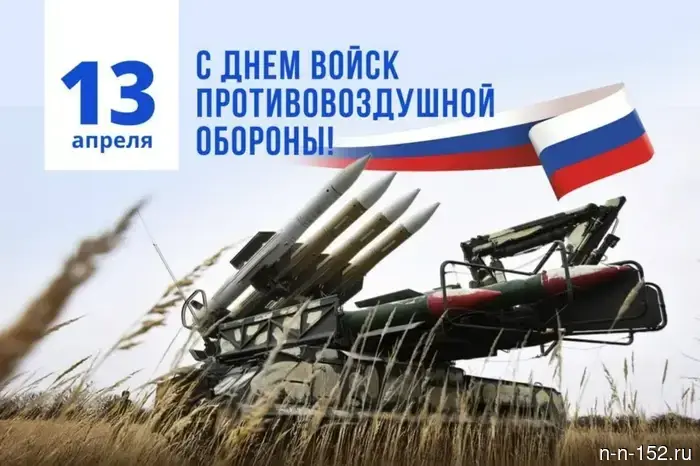 Gleb Nikitin congratulated the servicemen and veterans of the air defense forces.
April 13, on the Day of the Air Defense Forces of Russia, the governor of the Nizhny Novgorod region, 04.13.2026. Vachsky municipal district. Nizhny Novgorod region. Vacha.
The number of patients with norovirus in Uren has increased to 70.
The number of patients with norovirus in Uren, Nizhny Novgorod region has increased to 70. 13.04.2026. NTA-Volga. Nizhny Novgorod region. Nizhny Novgorod.
Gleb Nikitin congratulated the servicemen and veterans of the air defense forces.
April 13, on the Day of the Air Defense Forces of Russia, the governor of the Nizhny Novgorod region, 04.13.2026. Vachsky municipal district. Nizhny Novgorod region. Vacha.
The number of patients with norovirus in Uren has increased to 70.
The number of patients with norovirus in Uren, Nizhny Novgorod region has increased to 70. 13.04.2026. NTA-Volga. Nizhny Novgorod region. Nizhny Novgorod.
Laser metal cleaning: a technology that is increasingly chosen instead of sandblasting and chemicals.
News of Nizhny Novgorod