
"Bright holidays - a safe spring!"
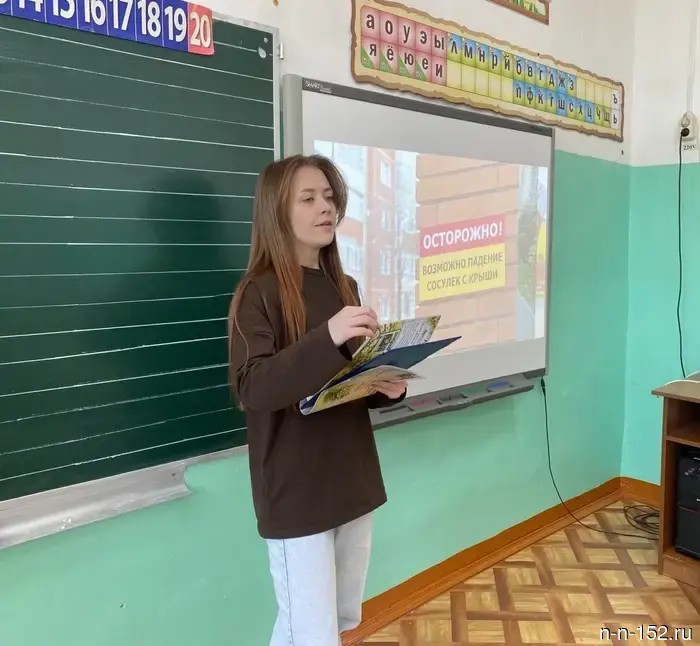
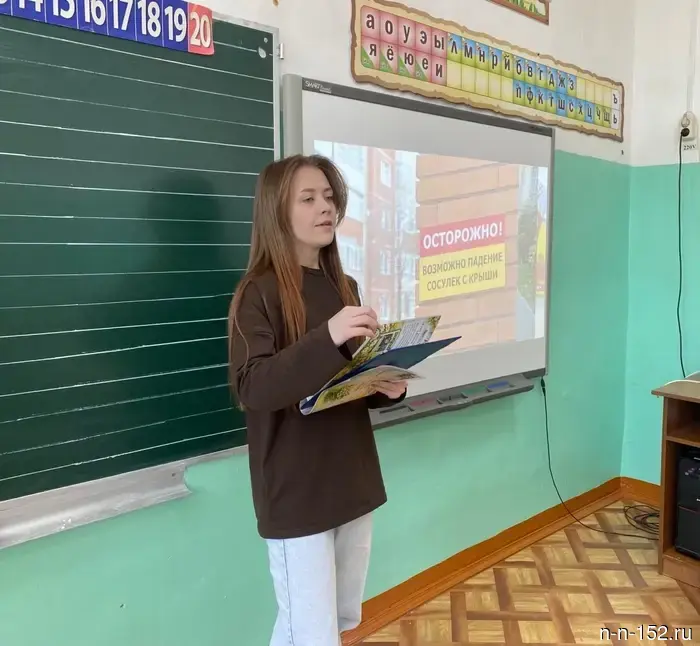
In anticipation of the spring break, the staff of the city children's library No. 2 held an interactive lesson titled "Bright Holidays - Safe Spring!" for the students of the 4th grade "A" class of Lyceum No. 3. The spring sun and the long-awaited warmth entice children outside, but it is precisely at this time of year that the number of risks increases dramatically. To ensure that the holidays are fun and incident-free, the librarians turned the discussion about safety rules into an exciting operation game.
Welcoming the children, the host began with a simple question: "What changes outside with the arrival of spring?" The students eagerly listed puddles, bright sunshine, icicles, etc. But when she asked why adults start to worry more about children in spring than in winter, the kids paused to think. It turns out that the main danger of spring lies in its deceptiveness. In winter, all dangers are obvious: it's cold - you need to dress warmly, it's slippery - you need to walk carefully. In spring, however, nature masks the threats. To set the children in a serious mood, they underwent a quick test during which they collectively determined what is dangerous and what is not. Bright sun in the eyes? Dangerous - it blinds drivers and pedestrians. A large puddle? Dangerous - an open manhole may be hidden beneath it. However, riding a bicycle, as it turned out, can be safe only if strict rules are followed.
The first block "Ice That Doesn't Crack" was dedicated to the most treacherous spring danger - thin ice. The children learned the physics of the phenomenon: while winter ice warns of trouble with cracking, spring ice turns into a needle-like mass and crumbles silently underfoot, like cotton candy. A mini-quiz "Truth or Myth?" helped reinforce the knowledge. The children actively clapped and stomped, debunking myths. The most important discovery for many was that even thick ice in spring can be loose and unreliable, and rescuing a friend who has fallen through should only be done by crawling, using sticks or a scarf, not by running.
The second block "What Hangs Overhead?" made the children look up. The discussion turned to icicles and snow masses falling from roofs. To test their attentiveness, we played the game "Up-Down." The conditions changed constantly: if danger threatened from above, they had to cover their heads with their hands; if from below - clap their hands. The librarian intentionally tried to confuse the children by speeding up the pace, but the class handled it excellently, mastering the main algorithm: when passing by a house, look not only at your feet but also up, and do not ignore barriers.
The block on road safety particularly interested the students. The host posed an intriguing question: what do bright sunshine, dirty glass, and reflections from puddles have in common? It turns out that all of these hinder a driver from seeing a pedestrian. To demonstrate this visually, an experiment called "Through the Driver's Eyes" was conducted. One of the students sat in an improvised "cabin" and looked at the "pedestrian" through a translucent scarf - simulating dirty glass, while the "pedestrian" stood to the side. The "driver's" task was simple - to read the signs in the hands of the "pedestrian." Despite looking straight ahead, it turned out to be nearly impossible. The experiment made a significant impression on the children. They saw firsthand that a driver might not notice a person even at close range. The conclusion the fourth graders drew for themselves was that before crossing the road, it is essential to establish "eye contact" with the driver.
With the arrival of warm weather, many children feel the urge to take out their bicycles and scooters. The librarian reminded them of the ironclad rule: it is illegal to ride on the roadway until the age of 14! But even in the yard, traps await. We discussed two main ones: "slippery turn" (sand and ice under the snow) and "parked car" (which obstructs the view for the exiting cyclist). In the interactive "Believe - Don't Believe," the children confidently answered questions: is it mandatory to wear a helmet, can you listen to music through headphones while riding, etc. And in the game "Find the Offender," the students eagerly identified mistakes in pictures, noting that you cannot ride while holding the handlebars with one hand or being distracted by a phone.
In the final part of the lesson, we talked about the whims of spring weather. The students learned why it is not advisable to remove a hat immediately when the first warmth arrives: the neck, head, and lower back are the main "batteries" of the body through which we lose heat. After all, hypothermia can lead to serious illnesses. An important element was role-playing games on the topic of "Dangerous Stranger." The students acted out situations in which wrongdoers tried to use standard tricks: asking for help, false reports about a sick mother, treats, or invitations to see puppies. The class acted as experts, voting on the correct actions. The children demonstrated that they firmly grasped the main rules: do not talk to strangers, do not get into cars, do not accept gifts, and do not enter the entrance with strangers.
Today, the children not only gained important knowledge but also learned to apply it in game-like, real-life situations. The library staff is confident that now the students' holidays will be truly bright, fun, and most importantly, safe. A.P. Zueva, librarian of the city children's library No. 2
Другие Новости Нижнего (Н-Н-152)
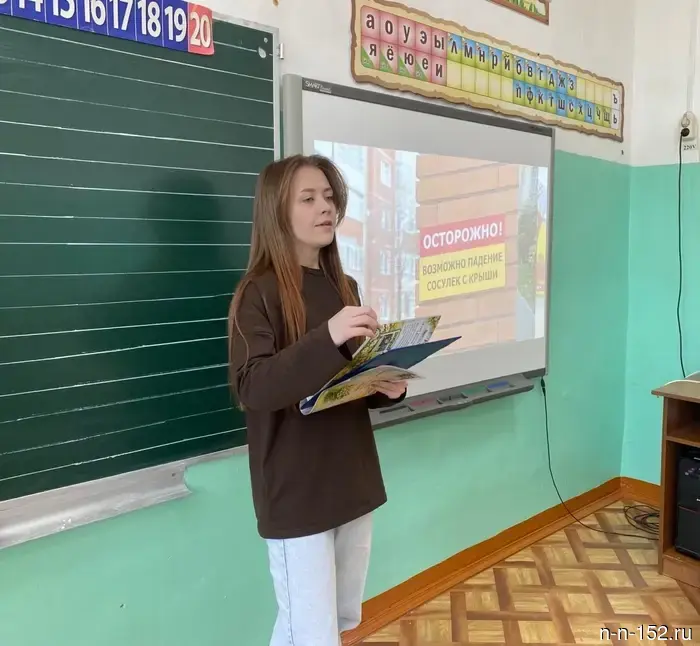 "Bright holidays - a safe spring!"
In anticipation of the spring break, the staff of the City Children's Library No. 2 held an interactive lesson "Bright Holidays - Safe Spring!" for the students of the 4th grade "A" class of Lyceum No. 3. 24.03.2026. Centralized Library System of Kulebaki. Nizhny Novgorod Region. Kulebaki.
The seminar on the rehabilitation of children with hearing impairments brought together doctors, educators, and parents from Nizhny Novgorod.
The event was organized as part of the United Russia party project "Strong Family"
A two-day seminar "Family - the foundation of a child's rehabilitation" took place in Nizhny Novgorod. 24.03.2026. United Russia. Nizhny Novgorod Region. Nizhny Novgorod.
"Bright holidays - a safe spring!"
In anticipation of the spring break, the staff of the City Children's Library No. 2 held an interactive lesson "Bright Holidays - Safe Spring!" for the students of the 4th grade "A" class of Lyceum No. 3. 24.03.2026. Centralized Library System of Kulebaki. Nizhny Novgorod Region. Kulebaki.
The seminar on the rehabilitation of children with hearing impairments brought together doctors, educators, and parents from Nizhny Novgorod.
The event was organized as part of the United Russia party project "Strong Family"
A two-day seminar "Family - the foundation of a child's rehabilitation" took place in Nizhny Novgorod. 24.03.2026. United Russia. Nizhny Novgorod Region. Nizhny Novgorod.
 Nizhny Novgorod resident Mark Eidelshtein will star in a new series with Yankovsky.
News of Nizhny Novgorod
Nizhny Novgorod resident Mark Eidelshtein will star in a new series with Yankovsky.
News of Nizhny Novgorod
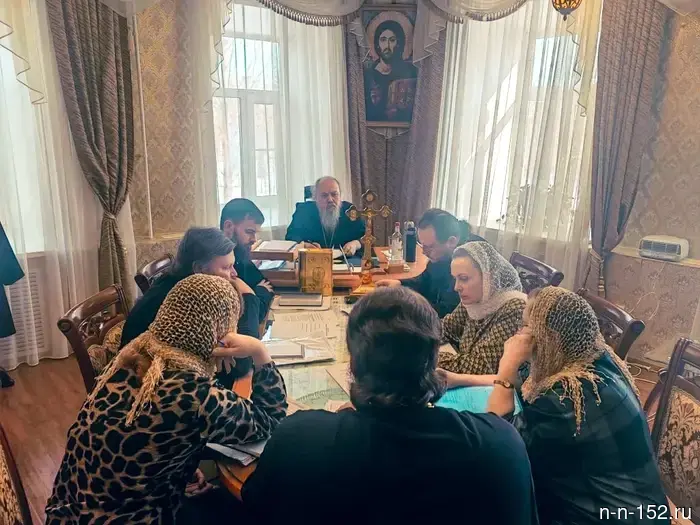 A meeting was held between Bishop Gideon and the heads of the structural divisions of the diocesan administration.
Bishop Gideon of Vyksa and Pavlovsk held a working meeting with the heads and staff of the structural and administrative-economic divisions of the Vyksa Diocese. 24.03.2026. Vyksa Diocese. Nizhny Novgorod Region. Vyksa.
A meeting was held between Bishop Gideon and the heads of the structural divisions of the diocesan administration.
Bishop Gideon of Vyksa and Pavlovsk held a working meeting with the heads and staff of the structural and administrative-economic divisions of the Vyksa Diocese. 24.03.2026. Vyksa Diocese. Nizhny Novgorod Region. Vyksa.
 Over the past four years, tourist traffic to the Kerzhensky Nature Reserve has increased by 2.1 times.
The number of independent travelers has significantly increased.
The tourist flow to the Kerzhensky Nature Reserve has increased by 2.1 times over the past four years. 03/24/2026. City Day Newspaper. Nizhny Novgorod. Nizhny Novgorod Region. Nizhny Novgorod.
The seminar on the rehabilitation of children with hearing impairments brought together doctors, educators, and parents from Nizhny Novgorod.
The event was organized as part of the United Russia party project "Strong Family"
A two-day seminar "Family - the foundation of child rehabilitation" took place in Nizhny Novgorod. 24.03.2026. United Russia. Nizhny Novgorod Region. Nizhny Novgorod.
Over the past four years, tourist traffic to the Kerzhensky Nature Reserve has increased by 2.1 times.
The number of independent travelers has significantly increased.
The tourist flow to the Kerzhensky Nature Reserve has increased by 2.1 times over the past four years. 03/24/2026. City Day Newspaper. Nizhny Novgorod. Nizhny Novgorod Region. Nizhny Novgorod.
The seminar on the rehabilitation of children with hearing impairments brought together doctors, educators, and parents from Nizhny Novgorod.
The event was organized as part of the United Russia party project "Strong Family"
A two-day seminar "Family - the foundation of child rehabilitation" took place in Nizhny Novgorod. 24.03.2026. United Russia. Nizhny Novgorod Region. Nizhny Novgorod.
"Bright holidays - a safe spring!"
In anticipation of the spring break, the staff of the City Children's Library No. 2 held an interactive lesson "Bright Holidays - Safe Spring!" for the students of the 4th grade "A" class of Lyceum No. 3. 24.03.2026. Centralized Library System of Kulebaki. Nizhny Novgorod Region. Kulebaki.