
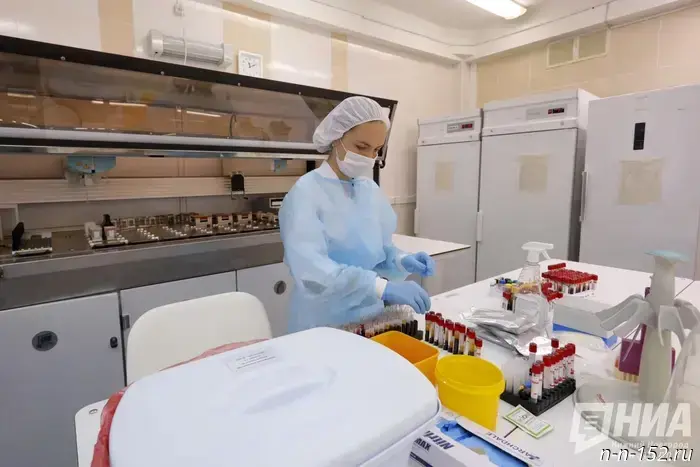
Almost 19,000 people living with HIV in Nizhny Novgorod are under observation.
02 December 2025 09:59 Society World AIDS Day is observed annually on December 1. It was established in 1988 by a decision of the World Health Organization and the UN General Assembly. Its main goal is to draw attention to the problem of HIV spread and to remind people of the importance of prevention, early diagnosis, and treatment.
The slogan for World AIDS Day 2025 is: "Overcoming challenges, transforming the AIDS response." It emphasizes the need to adapt approaches to combating the epidemic and to overcome barriers that impede effective control of the virus.
Despite advances in treatment and prevention, the number of new HIV infections worldwide continues to grow. Moreover, the virus is increasingly being detected in people who are not part of traditionally vulnerable groups.
HIV and AIDS: what’s the difference
The human immunodeficiency virus (HIV) attacks the immune system, weakening its protective functions. Without treatment the infection progresses and can develop into the final stage — acquired immunodeficiency syndrome (AIDS). At this stage the body loses its ability to fight infections and malignant tumors.
However, timely detection of HIV and the start of therapy make it possible to avoid the development of AIDS, preserve health, and live a full life.
Diagnosis and treatment
Anyone can get free and anonymous HIV testing at the local polyclinic or at specialized HIV prevention and control centers. In Russia testing is voluntary and is accompanied by mandatory counseling before and after the test.
Today HIV infection is considered a chronic condition that can be controlled. Antiretroviral therapy (ART) not only helps preserve a high quality of life but also significantly reduces the risk of transmitting the virus to others.
How HIV is transmitted
There are only three routes of HIV transmission:
- Sexual — unprotected contact with an HIV-positive partner. In recent years this route has become predominant.
- Through blood — when sharing syringes, non-sterile instruments for tattoos and piercings. The risk of infection is especially high among people who inject drugs.
- From mother to child — during pregnancy, childbirth, or breastfeeding. With timely treatment the risk of transmission is reduced to a minimum.
There are no other modes of HIV transmission. The virus is not transmitted through handshakes, hugs, sharing dishes, insect bites, or airborne droplets.
Prevention — the primary protection
The main way to prevent infection is safe behavior. It is important to use protection during sexual activity, be faithful to your partner, refrain from using drugs, and avoid questionable procedures that involve breaking the skin.
Pregnant women with HIV can give birth to a healthy child if treatment is started in time. Therefore it is especially important to know your HIV status.
Situation in the Nizhny Novgorod Region
As of November 25, 2025, 18,697 people with HIV infection are under observation in the Nizhny Novgorod Region. Of these, 17,772 are receiving treatment, including 234 children under 18. In 82.5% of cases the virus is transmitted sexually.
The state guarantees free medical care and access to ART. People living with HIV have all the rights provided by Russian Federation legislation and can expect full support.
Where to seek help
In the Nizhny Novgorod Region, assistance on HIV issues is provided by the Center for Prevention and Control of AIDS. Address: Nizhny Novgorod, Minina St., 20/3 E. Hotline: 214-0-214 (ext. 847). For legal questions you can call ext. 807.
Earlier it was reported that the HIV prevalence in the Nizhny Novgorod Region is about 0.7%. NIA "Nizhny Novgorod" has a Telegram channel. Subscribe to stay informed about the main events, exclusive materials, and up-to-date information. Copyright © 1999—2025 NIA "Nizhny Novgorod". When republishing a hyperlink to NIA "Nizhny Novgorod" is mandatory. This resource may contain 18+ materials.
Другие Новости Нижнего (Н-Н-152)
 The All-Russian Legal Dictation will help Nizhny Novgorod residents test their legal literacy.
The Association of Lawyers of Russia invites residents of the Nizhny Novgorod Region to take part in the All-Russian legal (juridical) dictation, which will take place from December 3 to December 12, 2025 on the official portal: https://юрдиктант.рф//. December 2, 2025. Znamya newspaper. Nizhny Novgorod Region. Bolshoye Murashkino.
The All-Russian Legal Dictation will help Nizhny Novgorod residents test their legal literacy.
The Association of Lawyers of Russia invites residents of the Nizhny Novgorod Region to take part in the All-Russian legal (juridical) dictation, which will take place from December 3 to December 12, 2025 on the official portal: https://юрдиктант.рф//. December 2, 2025. Znamya newspaper. Nizhny Novgorod Region. Bolshoye Murashkino.
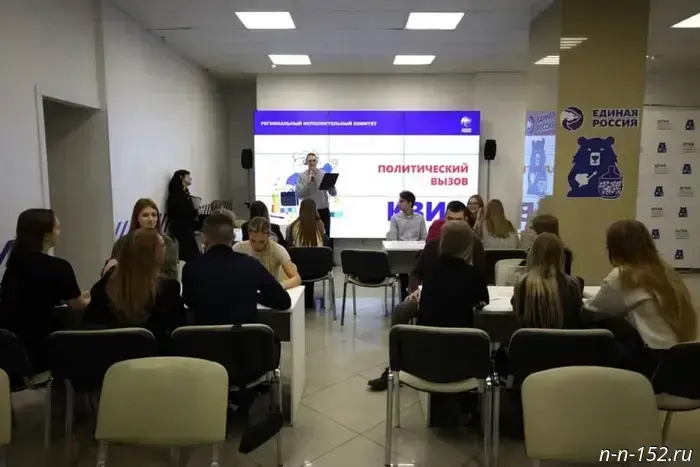 In honor of the United Russia party's birthday, United Russia held a quiz for students in Nizhny Novgorod.
The United Russia party celebrated its 24th anniversary
A quiz called "Political Challenge" was held at the Public Support Headquarters. 02.12.2025. United Russia. Nizhny Novgorod Oblast. Nizhny Novgorod.
In honor of the United Russia party's birthday, United Russia held a quiz for students in Nizhny Novgorod.
The United Russia party celebrated its 24th anniversary
A quiz called "Political Challenge" was held at the Public Support Headquarters. 02.12.2025. United Russia. Nizhny Novgorod Oblast. Nizhny Novgorod.
 Nearly 1.6 million square meters of housing will be built in Novinki.
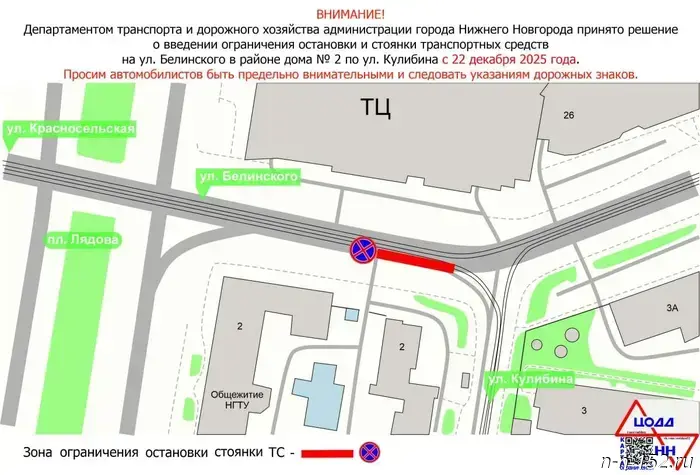 Parking will be prohibited on Belinsky Street near the Nebo shopping center.
A young athlete was saved from clinical death at Vorotynskaya Central District Hospital.
Photo: freepik.com
Doctors at the Vorotynsk Central District Hospital managed to save a young athlete who went into clinical death after hospitalization. December 2, 2025. Online publication We Live in Nizhny. Nizhny Novgorod Region. Nizhny Novgorod.
Parking will be prohibited on Belinsky Street near the Nebo shopping center.
A young athlete was saved from clinical death at Vorotynskaya Central District Hospital.
Photo: freepik.com
Doctors at the Vorotynsk Central District Hospital managed to save a young athlete who went into clinical death after hospitalization. December 2, 2025. Online publication We Live in Nizhny. Nizhny Novgorod Region. Nizhny Novgorod.
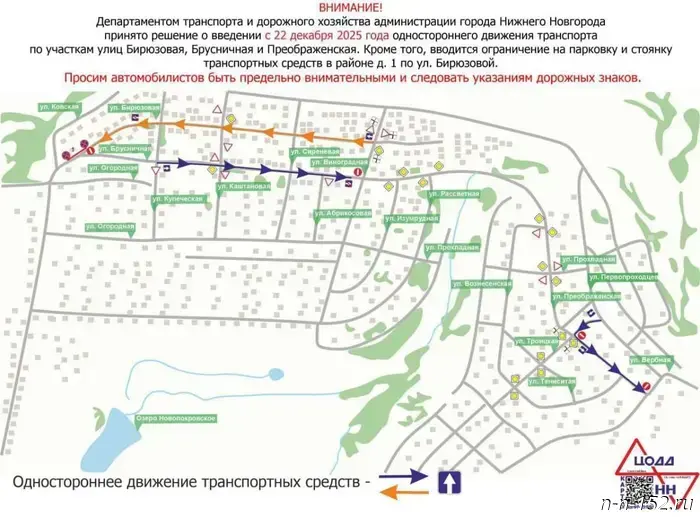 One-way traffic is being introduced on the streets of the TIZ "Novoye Pokrovskoye".