
From barracks to Stalinist Empire: what surprises the Kalininsky microdistrict in Nizhny Novgorod — photo report
Nizhny Novgorod is woven from microdistricts, former settlements, slums, and historical quarters. They preserve the memory of bygone times. Some of them are being restored, recreating the environment while maintaining the characteristic appearance of the place. Others have literally frozen in time. One such unique place is the Kalininsky microdistrict in the Moskovsky district, or, as locals habitually call it, the settlement named after Kalinin. A correspondent from IA "In the city N" has visited these corners several times, and this time decided to study in more detail and take a closer look at the microdistrict that attracts knowledgeable tourists, urbanists, and connoisseurs of the special Soviet aesthetics of the 1940s and 50s.
Historical reference
The future residential area was built on marshy land in the late 1920s for workers of the Nizhny Novgorod Machine Engineering Plant (formerly "Novo Sormovo"), founded in 1932. The creation of giants of the industrial industry—NMZ, aviation, and shipbuilding plants—contributed to the emergence and development of separate settlements around them. Typically, houses resembling real palaces were built for high-ranking officials, simpler buildings were intended for engineering and technical staff, while dormitories were for the working class. The settlement was named in honor of Mikhail Ivanovich Kalinin—a Soviet state and party figure who served as Chairman of the Presidium of the Supreme Soviet of the USSR.
In those years, the settlement was designed on the principle of "a city within a city" with all amenities and infrastructure: clinics, kindergartens, hospitals, schools, a cultural center, a police station, and wide sidewalks. In short, everything was done for a comfortable and convenient life: a full-fledged environment was created for workers. The settlement is rich in architecture of various styles: here you can find buildings related to post-constructivism, Soviet monumental classicism, known as "Stalinist Empire."
Our days
Today, the territory of the former settlement is one of six microdistricts in the Moskovsky district. It is located within the boundaries of the streets of the 50th Anniversary of Victory, Prosvetshenskaya, Hero Ryabtsev, St. Revolution Guard, and Comintern. On one side, there is a machine engineering plant, and on the other, there are aviation and Sormovsky parks. The territory of the former settlement is also adjacent to the microdistricts of Sportivny, Berezovsky, and Krasnye Zori. You can easily reach Kalininsky by several means: by metro to the "Burevestnik" station or by ground public transport to the "Varya Station" stop.
Walk
The acquaintance with the Kalininsky microdistrict began from the machine engineering plant, around which the workers' settlement was originally built. Next to the plant management and the central checkpoint of the defense enterprise, several small green areas are laid out, densely planted with fir trees, thuja, and other shrubs.
In one of the small parks, there is a monument to Vladimir Lenin, and in the neighboring one, near the entrance to the plant's territory, there is a military memorial dedicated to the creators of the ZIS-3 cannon.
The pedestrian zone along Sormovsky Highway is fenced off from the busy road by tall trees. At a time when their crowns are still lush and green, there is less dust, and the passing cars are hardly noticeable behind this living hedge. Right next to NMZ is the Sormovsky Mechanical Technical School. In the area next to it, there is a monument to the pilot-attack aircraft, Hero of the Soviet Union Konstantin Davydov.
The acquaintance with the architecture of Soviet strict classicism begins already in this area. For example, in one of the buildings erected in the 1940s, there is a furniture hardware store, and a little further away is a building from 1956, which now houses the educational building of the Higher School of Economics.
The center of the Kalininsky microdistrict is unique for its low-rise diverse development: here you can find barracks for plant workers, brick buildings, and, of course, Stalin-era buildings. It is also characterized by an abundance of decorative embellishments on the facades of buildings, the presence of wide sidewalks, and cozy green courtyards. At the intersection with Comintern Street, there is a park named after the 50th Anniversary of Victory. Here stands a monument to Lenin, there are several flower beds, and a little deeper into the space, there are benches surrounded by shrubs and flowers.
Perhaps the main architectural dominant, the pearl of the Kalininsky microdistrict, is the "Residential building of the Oil and Gas Plant"—a bright example of Stalinist period architecture. It was built according to the project of Alexander Yakovlev in 1936-1939. The apartments were intended for plant engineers, designers, and production leaders. The building is included in the list of cultural heritage sites of regional significance. Interestingly, this was the first building in Nizhny Novgorod to be gasified.
The central corner part of the "Neftegaz" building is made in the form of a six-story risalit—an extension. It is emphasized by six semi-columns and topped with a rectangular belvedere with a colonnade around the perimeter. The windows are framed with ornate frames, and the balconies retain railings with classical balusters. It is worth noting that despite the scale of the building, it does not seem overloaded; on the contrary, it is quite restrained.
The ensemble of five separate buildings forms a large pentagon, with a park—Yubileyny—in its center. Seven sports and children's playgrounds with various equipment were created for the residents of the house. In addition, in the park, you can simply sit on benches in the shade of trees. This is a kind of oasis in the center of the residential complex.
The inner courtyard of the residential building is quiet and calm; the sounds of cars are hardly heard here due to the peculiarities of the construction. It is also worth noting that this area is rich in greenery. The internal driveways are quite wide. Here you can feel the air, which is sometimes so lacking in modern residential construction, where houses are almost closely packed together.
Around the outer perimeter of the building are chain grocery stores, beauty salons and hairdressers, a post office, offices of various organizations, drinking establishments, and Children's Music School No. 12 named after P. I. Tchaikovsky.
We continue our walk through the microdistrict further along the street of the 50th Anniversary of Victory and peek into another cozy courtyard of house No. 6/2. The building stands at the intersection of Gvardeytsev and 50th Anniversary of Victory streets. This four-story building was erected in 1941. It is evident that the facade was recently renovated—there are no cracks or peeling plaster. The house has nine entrances, and small green islands planted with flowers and shrubs lead to most of them.
However, it is worth noting that alongside examples of classical Stalinist architecture with stucco, balustrades, and arches, there are unremarkable "boxes." Such, for example, stretch along the same street of the 50th Anniversary of October, up to the intersection with Heroes Avenue. The three-story houses from 1959 look much worse than their "neighbors," but the same coziness reigns in the inner courtyards: locals try to keep the yard space tidy.
One of the courtyards is located near the checkpoint of the machine engineering plant: nearby is the workers' parking lot, and in a small courtyard, residents' clothes are drying.
We remain on the street of the 50th Anniversary of Victory. One of the new buildings here is a church in honor of the Reverend Seraphim of Sarov. In 2013, Metropolitan Georgy consecrated a cross at the site of future construction, and in 2014, the laying of the temple was performed. On May 6, 2018, the temple was consecrated.
One of the most interesting objects is the building of the former House of Culture "Victory." The cultural center was opened in 1949. And in 1982, for the 50th anniversary of the machine engineering plant, the House of Culture received a new building in the style of modernism. Its facade faces the street of the 50th Anniversary of Victory. The entrance to the building is adorned with a figure of Nike-Victory.
In the early 2000s, "Victory" ceased to exist as a major cultural center of the Moskovsky district, and since then it has housed offices, various studios, a grocery store, and a pick-up point.
There is also a small corner that resembles a location from a video game or a movie in a post-apocalyptic style: walls, former showcases, windows, air conditioners—all overgrown with wild plants, the entrance doors are boarded up and locked. All surfaces are covered with graffiti and drawings, as well as posters. It looks very atmospheric.
In the old building of the House of Culture, there is now a Christian Bible center "Embassy of Jesus," where Protestant services are held.
Another street where constructivist houses from the 1930s have been preserved is Heroes Bezrukova. The dormitories, of course, look abandoned; the territory, although densely green, does not resemble a neat garden: the plants grow chaotically.
Nearby, on the street of the 50th Anniversary of Victory, 24, is the second building of school No. 115.
Другие Новости Нижнего (Н-Н-152)
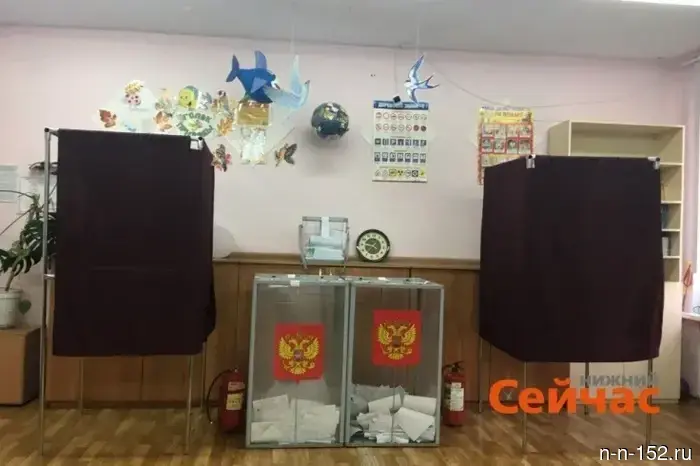 2.45 million voters live in the Nizhny Novgorod region.
The number of voters in the Nizhny Novgorod region has been established as of July 1, 2026. 07/20/2026. IA Nizhny Now. Nizhny Novgorod region. Nizhny Novgorod.
More than 600 Nizhny Novgorod students participated in the anti-terrorist action.
Preventive measures took place in the camps "Zarya" and "Zhdanovets" on the Gorky Reservoir. More than 600 Nizhny Novgorod students participated in the anti-terrorist action. 26.07.2026. Komsomolskaya Pravda. Nizhny Novgorod Region. Nizhny Novgorod.
A driver without a license received six reports after an accident near the "Switzerland" park.
News of Nizhny Novgorod
2.45 million voters live in the Nizhny Novgorod region.
The number of voters in the Nizhny Novgorod region has been established as of July 1, 2026. 07/20/2026. IA Nizhny Now. Nizhny Novgorod region. Nizhny Novgorod.
More than 600 Nizhny Novgorod students participated in the anti-terrorist action.
Preventive measures took place in the camps "Zarya" and "Zhdanovets" on the Gorky Reservoir. More than 600 Nizhny Novgorod students participated in the anti-terrorist action. 26.07.2026. Komsomolskaya Pravda. Nizhny Novgorod Region. Nizhny Novgorod.
A driver without a license received six reports after an accident near the "Switzerland" park.
News of Nizhny Novgorod
 More than 600 Nizhny Novgorod students participated in the anti-terrorist action.
Preventive measures took place in the camps "Zarya" and "Zhdanovets" on the Gorky Reservoir. More than 600 Nizhny Novgorod students participated in the anti-terrorist action. 26.07.2026. Komsomolskaya Pravda. Nizhny Novgorod Region. Nizhny Novgorod.
More than 600 Nizhny Novgorod students participated in the anti-terrorist action.
Preventive measures took place in the camps "Zarya" and "Zhdanovets" on the Gorky Reservoir. More than 600 Nizhny Novgorod students participated in the anti-terrorist action. 26.07.2026. Komsomolskaya Pravda. Nizhny Novgorod Region. Nizhny Novgorod.
From barracks to Stalinist Empire: what surprises the Kalininsky microdistrict in Nizhny Novgorod — photo report
Nizhny Novgorod is woven from microdistricts, former villages, settlements, and historical quarters. 07.23.2026. vGorodeN.Ru. Nizhny Novgorod Region. Nizhny Novgorod.