
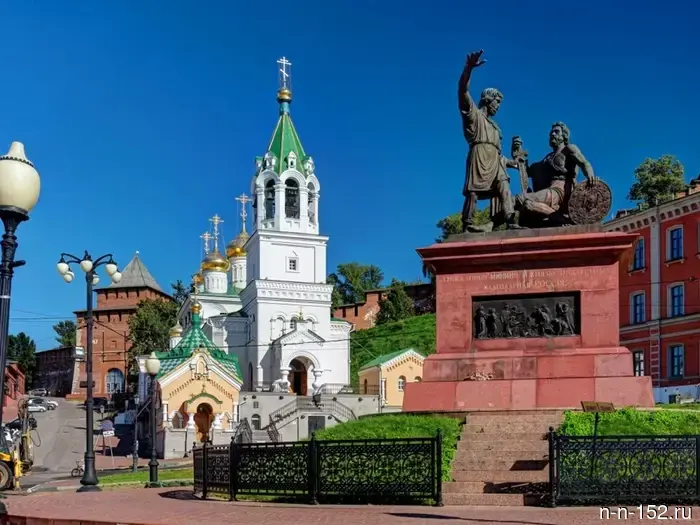
Event monitoring expert report from July 6 to July 10, 2026 by the Autonomous Non-Profit Organization "Minin Center"
Experts from the "Minin Center" analyze the events of the past week that influence the socio-political situation in the world, Russia, and the Nizhny Novgorod region, where long-term trends are manifesting. The topics of this week are "A New Stage in the Military Conflict in Ukraine," "The IOC Lifted Restrictions on Russian Athletes - What Does This Mean?", "The Fuel Crisis."
Federal Topic - "A New Stage in the Military Conflict in Ukraine"
Expert from the "Minin Center," Associate Professor at the IMOMI of NNGU named after N.I. Lobachevsky, PhD in History Sergey Krivov:
"Recently, there has been increasing talk about a new stage in the military conflict in Ukraine. This refers to drone and missile strikes on the rear, including civilian infrastructure of both sides. There is an obvious escalation of the atmosphere, including through their own information resources, exacerbating an already difficult situation. The authorities and the armed forces are criticized for taking delayed measures that many 'experts' believe should have been addressed long ago. Finally, in May, the State Duma adopted amendments to the 2019 legislation, expanding the circle of organizations and structures authorized to shoot down drones. Moreover, at the end of 2025, the first regional centralized drone defense system in Russia, "Arierghard," began testing in St. Petersburg. Similar experiences are being applied in several other regions, including the Nizhny Novgorod region.
The main problem is that shooting down drones in urban areas is extremely dangerous, as the trajectory of their flight, and especially the places where debris falls, become unpredictable. Moreover, the interception means themselves can pose a danger. It is important to understand the very reason why the enemy is trying to attack our cities.
Firstly, it is the informational effect. Images of infrastructure fires are quite effective and influence the perception of both the Ukrainian and Western public, as well as Russians. Despite obvious failures on the front, the Ukrainian leadership tries to create an impression of symmetry in their efforts. At the same time, the Russian side conducts similar activities, but since they have quite practical meaning in terms of solving combat tasks, this creates an illusion of 'insufficiently decisive' responses. Many Russian sources raise a rather manipulative question, 'What will Russia (Putin) respond with?', which, given the ongoing special military operation for the fifth year, is perplexing. Russia is conducting planned activities to destroy the military potential of the Armed Forces of Ukraine, and the choice of targets depends not on the symbolic significance of a particular object, but on its use by the enemy for conducting combat operations. Secondly, the Ukrainian command uses strikes deep into Russian territory to draw Russian air defense resources further from the front line. Thirdly, there is a bet on provoking panic sentiments in Russian society and forming a sense of 'war fatigue,' which is intended to increase pressure on the authorities and stimulate anti-war sentiments.
It is undoubtedly pointless to deny the negative effect of drone strikes. However, it is necessary to understand the following. The power of a drone's warhead is insufficient to destroy a large object, including a refinery. Moreover, drones are not a cheap way of waging war, which is a common misconception. The production, storage, transportation, launch, and targeting of drones are extremely costly. Long-range drones (like 'Lyuty') with high launch intensity over 300 days a year cost the enemy even theoretically 15-19 billion dollars, and in reality, even more, considering the loss of many of them at the storage and transportation stage. The entire FPV drone program is estimated at about the same 20 billion dollars, and considering reconnaissance drones, heavy drones like 'Baba-Yaga,' ground drones, underwater and surface unmanned strike systems (BES), it should be acknowledged that Ukraine's 'drone wall' costs Western partners 80-90 billion dollars, comparable to a two-year European loan and even exceeding expenditures on NASAMS and Patriot air defense systems. In this regard, it is clear that Russia's increase in long-range strikes on Ukrainian targets deep in the rear with ballistic missiles raises the question of shifting the focus of financing Ukraine towards air defense systems, which is part of the so-called war of attrition. In fact, we are putting the enemy in a tough choice, as it is impossible to support both programs (attack and defense) simultaneously. In fact, the enemy has gone all-in, increasing strikes on our territory at the expense of even its own air defense. It is clear that strikes on its own energy infrastructure in summer are not as critical as in winter due to the duration of daylight, absence of cold, and many city dwellers being at their summer cottages. At the same time, the summer tourist season in Russia creates a surge in demand for gasoline, making the motor fuel market vulnerable even to the slightest fluctuations.
The sharp activation of the air campaign by the Armed Forces of Ukraine indicates a certain exhaustion of means of pressure on Russia of a military and economic nature. Since August 2024, the Armed Forces of Ukraine have been unable to conduct offensive actions, and the front line, albeit relatively slowly, is shifting towards major Ukrainian urban centers - Sumy, Zaporizhzhia, Kharkiv, Sloviansk-Kramatorsk, which will inevitably raise the question of the evacuation of these cities. Methods of economic coercion have also not led to a decline in the Russian economy. Thus, the opposing side is using another lever of influence - the population of Russia. It is obvious that the reaction can be different. Voices are being raised about the need for tougher actions from the Russian military-political leadership. However, it is likely that such a scenario suits our opponents: to force the Russian leadership to reconsider the tactics of its actions, which consist of slowly wearing down the enemy's forces, and to switch to more costly sharp actions.
In this regard, the Russian authorities have taken some measures, including granting the right to counteract drones to private companies and regions. However, it is not entirely clear how the Ministry of Defense will share powers while maintaining a unified air defense contour for both 'big' and 'small' skies. Nevertheless, such measures, on the one hand, are a response to criticism for the insufficiency of measures, and on the other hand, they are a kind of rehearsal of ways to respond to potential challenges and security threats."
Federal Topic - "The IOC Lifted Restrictions on Russian Athletes - What Does This Mean?"
Chairman of the ANO "Minin Center" Alexey Orekhov:
"This week, there was seemingly good news - the International Olympic Committee temporarily restored the membership of the Russian Olympic Committee in its organization and lifted recommendations on restrictions concerning our athletes. However, the simple question 'At what cost was this achieved?' gives quite ambiguous answers.
They lifted it - yes, but temporarily. Conditioned by compliance with a number of conditions. The most important of which is that the Russian Olympic Committee 'no longer includes any sports organizations in the territories under the jurisdiction of the NOC of Ukraine,' i.e., referring to 'new territories,' Crimea, LPR, DPR, Kherson, Zaporizhzhia regions, which, according to the Constitution, are part of Russia. Agree, it's an ambiguous nuance. Moreover, the statement says that the ROC 'confirms that it does not conduct and will not conduct any activities in these territories.' And the IOC, in turn, will 'carefully monitor the situation regarding such activity of the ROC in these territories. And reserves the right to take necessary measures if necessary,' i.e., they are ready to cancel their 'temporary' decision at any moment if the Russian Olympic Committee works in any way with these territories.
On the one hand, the IOC does not seem to touch the internal structure of Russian sports and concerns only the formal affiliation of regional federations to the ROC, which, as a result of the reform, do not include any regional organizations at all. But here the nuances and symbols are important. And the mention in the text of 'territories under the jurisdiction of the NOC of Ukraine' is undoubtedly symbolic, not to mention the ROC's refusal to operate in these Russian territories.
And what about principles, and can a principled entity expect a decent future?
In addition, the IOC stated: the organization will decide on the demonstration of the Russian flag, anthem, colors, or any other symbols at the Olympic Games at the appropriate time. What this time is, and on what basis this decision will be made - is also unclear. Also, the IOC will not organize its events in Russia and invite Russian state officials to them.
There are also quite ambiguous nuances in the English-language original. For example, according to the statement, in addition to anti-doping tests, the ROC must guarantee that 'the selection of Russian athletes for the Olympic Games will be based not only on their sports achievements but also on their ability to be role models who respect, support, and contribute to building a peaceful society through sport.' It is clear that this maximally vague formulation - a broad field for endless manipulations, leaves ample room for interpretations, on the basis of which one can essentially manage and manipulate the selection of Russian athletes based on a wide range of political criteria.
At the same time, the IOC separately emphasizes its support for Ukraine and condemns Russia for 'invasion.'
Why it is still too early to talk about Russia's final restoration on the international sports arena. The IOC's decision is advisory in nature. The IOC called on international federations to interpret and apply the recommendations 'based on their own realities and the rules of their charters regarding the participation of Russian athletes in competitions.' In fact, the IOC has delegated the decision on all important issues to international federations,
Другие Новости Нижнего (Н-Н-152)
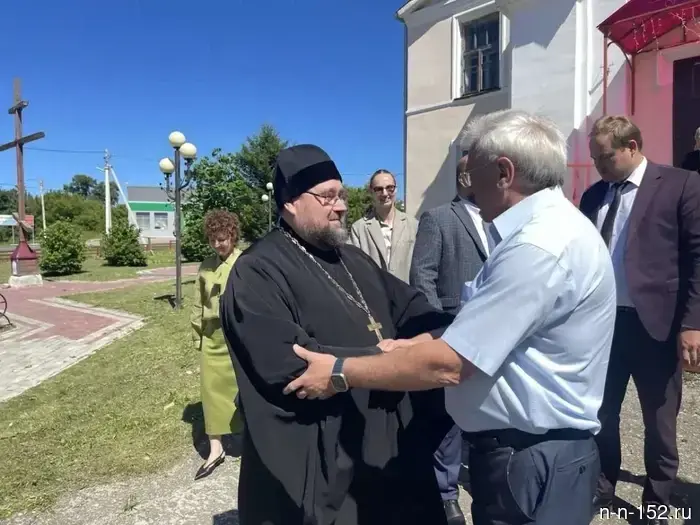 Evgeny Lyulin checked the progress of the restoration of the church in the village of Khmelevitsy.
News of Nizhny Novgorod
Evgeny Lyulin checked the progress of the restoration of the church in the village of Khmelevitsy.
News of Nizhny Novgorod
 577.4 million rubles were allocated for the repair of 25.6 km in the Dalnekonstantinovsky district.
The State Budgetary Institution of the Nizhny Novgorod Region "Main Department of Automobile Roads" has announced an open electronic competition for the repair of sections of automobile roads in the Dalenekonstantinovsky District of the Nizhny Novgorod Region. 10.07.2026. Nizhny Now. Nizhny Novgorod Region. Nizhny Novgorod.
577.4 million rubles were allocated for the repair of 25.6 km in the Dalnekonstantinovsky district.
The State Budgetary Institution of the Nizhny Novgorod Region "Main Department of Automobile Roads" has announced an open electronic competition for the repair of sections of automobile roads in the Dalenekonstantinovsky District of the Nizhny Novgorod Region. 10.07.2026. Nizhny Now. Nizhny Novgorod Region. Nizhny Novgorod.
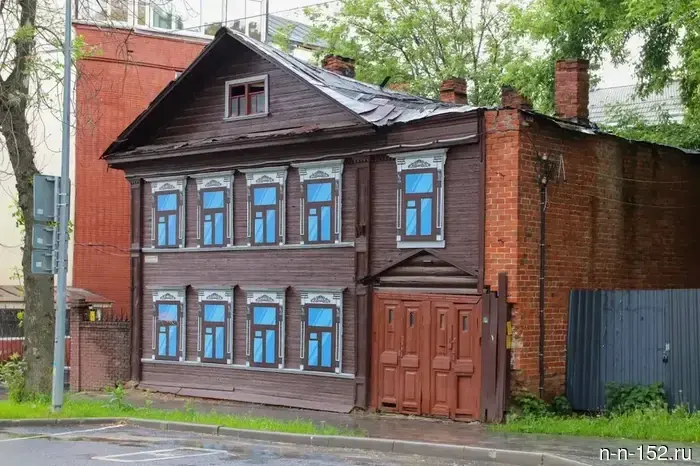 The historic house on Shevchenko Street in Nizhny Novgorod was sold for 16.3 million rubles.
The price of the building during the auction increased more than twofold. The historic house on Shevchenko Street in Nizhny Novgorod was sold for 16.3 million rubles. 10.07.2026. Komsomolskaya Pravda. Nizhny Novgorod Region. Nizhny Novgorod.
The historic house on Shevchenko Street in Nizhny Novgorod was sold for 16.3 million rubles.
The price of the building during the auction increased more than twofold. The historic house on Shevchenko Street in Nizhny Novgorod was sold for 16.3 million rubles. 10.07.2026. Komsomolskaya Pravda. Nizhny Novgorod Region. Nizhny Novgorod.
 The district officer was found dead near a house in Diveevo.
News of Nizhny Novgorod
The district officer was found dead near a house in Diveevo.
News of Nizhny Novgorod
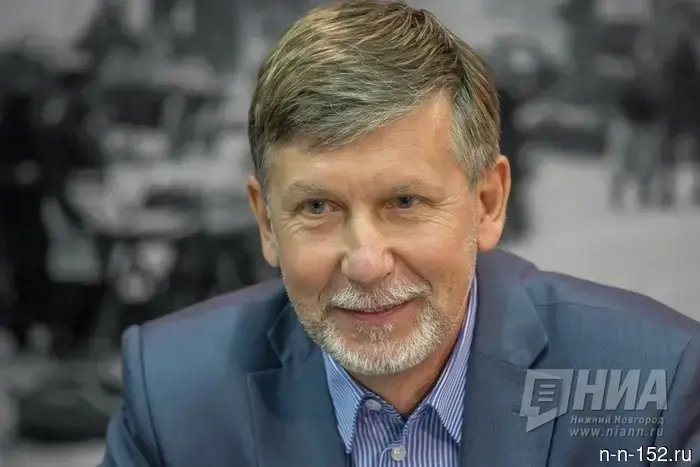 Andrey Dakhin: "Russia is becoming dependent on foreign states in terms of fuel."
News of Nizhny Novgorod
Andrey Dakhin: "Russia is becoming dependent on foreign states in terms of fuel."
News of Nizhny Novgorod
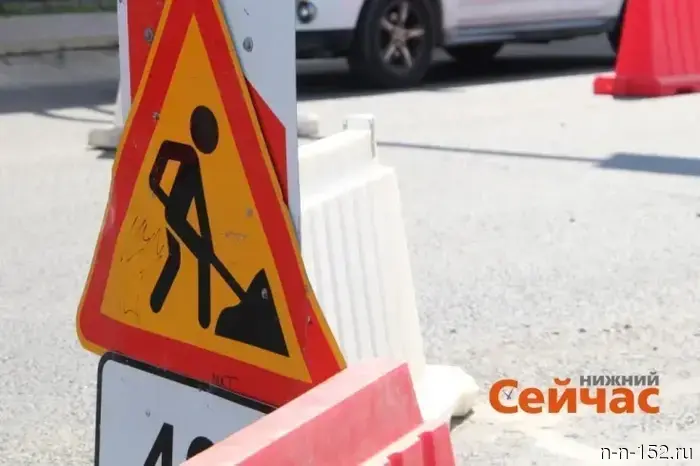 577.4 million rubles were allocated for the repair of 25.6 km in the Dalnekonstantinovsky district.
The State Budgetary Institution of the Nizhny Novgorod Region "Main Department of Highways" announced an open electronic competition for the repair of sections of highways in the Dalenekonstantinovsky District of the Nizhny Novgorod Region. 10.07.2026. Nizhny Now News Agency. Nizhny Novgorod Region. Nizhny Novgorod.
577.4 million rubles were allocated for the repair of 25.6 km in the Dalnekonstantinovsky district.
The State Budgetary Institution of the Nizhny Novgorod Region "Main Department of Highways" announced an open electronic competition for the repair of sections of highways in the Dalenekonstantinovsky District of the Nizhny Novgorod Region. 10.07.2026. Nizhny Now News Agency. Nizhny Novgorod Region. Nizhny Novgorod.
Event monitoring expert report from July 6 to July 10, 2026 by the Autonomous Non-Profit Organization "Minin Center"
News of Nizhny Novgorod