
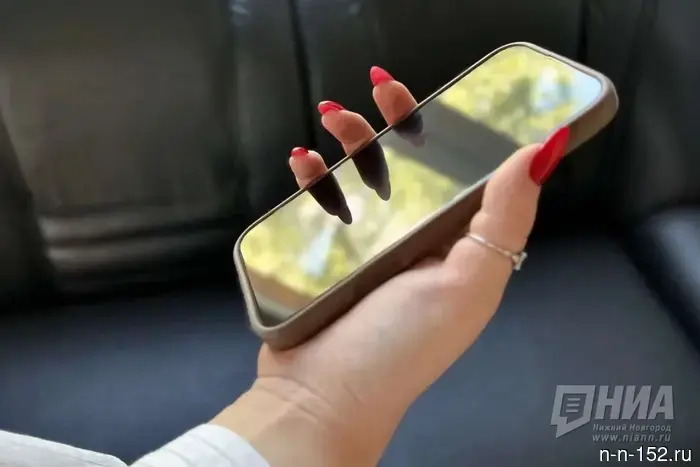
Nizhny Novgorod residents were warned about phishing emails with "gifts" for birthday celebrants.
On July 10, 2026, at 13:30 Society Scammers have once again started using the birthdays of Russians as a pretext for phishing attacks. Posing as congratulations from well-known services, banks, stores, or telecom operators, they offer gifts, bonuses, or payment doubling, but in reality, they are trying to seize bank card data. This was reported by Boris Lopatin, a senior expert in fraud incident investigations at MegaFon. According to the expert, one of the common schemes is related to the promise of doubling the mobile phone balance. Additionally, on their birthday, users may receive an email styled like a well-known service. It informs them about supposedly available bonus points, gift certificates, or other festive offers.
"A person is offered to follow a link to a website that externally mimics the page of a well-known company. There, they may be asked to enter bank card details supposedly to activate the bonus, double the payment to the balance, or confirm receipt of the gift. As a result, money may be deducted immediately, and in some cases, the scammers obtain payment details for further attempts to steal funds. The promised gift, of course, is not credited," explained Boris Lopatin.
He noted that scammers rely on the trust and festive mood of the birthday celebrants. On their birthday, people are more likely to expect congratulations and personal offers, so they may perceive such emails less critically. Additionally, the scammers use recognizable designs, logos, and wording similar to official company messages, making it difficult to distinguish a fake. According to the expert, scammers can impersonate almost any popular service: marketplaces, delivery services, banks, loyalty programs, online cinemas, telecom operators, stores, or travel platforms. Their main goal is to get the user to visit a fake website and enter payment details. Lopatin reminded that real bonuses and personal offers are usually displayed in the personal account or official app of the service. "To receive them, you do not need to visit third-party websites and re-enter bank card details," he emphasized.
The expert advises carefully checking emails promising gifts, monetary credits, promo codes, or payment doubling. First of all, pay attention to the sender's address: the service name in the "from" field may look familiar, but the full email address often contains discrepancies. Urgent calls to follow links, promises of overly generous gifts, and requests to enter bank card details should also raise suspicion. If an email raises doubts, it is not advisable to click on links within it. Information about promotions and bonuses should be verified through the official website of the company, mobile app, or personal account. If necessary, a screenshot of the email can be sent to the service's support team to clarify whether such a mailing was indeed conducted.
If bank card details have already been entered on a suspicious website, it is essential to block the card as quickly as possible through the bank's mobile app or by calling the hotline. Additionally, it is necessary to report the incident to the support service of the company from which the email was received, so that specialists can verify the information and take action, as well as notify the operator about the phishing resource. NIA "Nizhny Novgorod" has channels on Telegram and MAX. Subscribe to stay updated on the main events, exclusive materials, and operational information. Copyright © 1999—2025 NIA "Nizhny Novgorod". When reprinting, a hyperlink to NIA "Nizhny Novgorod" is mandatory. This resource may contain materials 18+
Другие Новости Нижнего (Н-Н-152)
 Almost 300 teenagers from large families in Nizhny Novgorod were employed in 2026.
News of Nizhny Novgorod
Almost 300 teenagers from large families in Nizhny Novgorod were employed in 2026.
News of Nizhny Novgorod
 A resident of Nizhny Novgorod paid 1.4 million rubles in alimony after the arrest of his car and vans.
News of Nizhny Novgorod
A resident of Nizhny Novgorod paid 1.4 million rubles in alimony after the arrest of his car and vans.
News of Nizhny Novgorod
 Wink and NTV presented the first teaser of the series "It's Hard to Be a God."
News of Nizhny Novgorod
Wink and NTV presented the first teaser of the series "It's Hard to Be a God."
News of Nizhny Novgorod
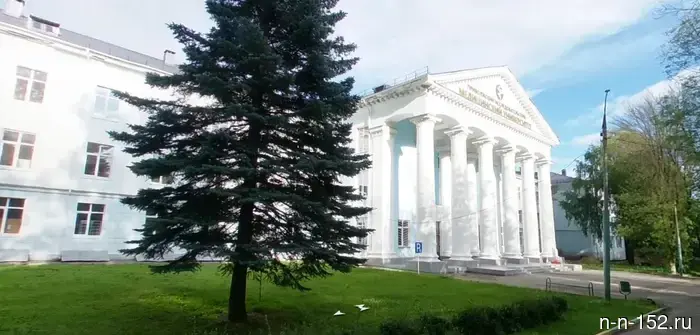 PIMU allocated 67.2 million rubles for the capital repair of the facade of the building on Gagarin.
News of Nizhny Novgorod
PIMU allocated 67.2 million rubles for the capital repair of the facade of the building on Gagarin.
News of Nizhny Novgorod
 The Tooth Fairy in Law: Anesthesia in Dentistry Will Become Mandatory from October 1st
News of Nizhny Novgorod
The Tooth Fairy in Law: Anesthesia in Dentistry Will Become Mandatory from October 1st
News of Nizhny Novgorod
 VTB warns about new schemes of investment fraud
News of Nizhny Novgorod
VTB warns about new schemes of investment fraud
News of Nizhny Novgorod
Nizhny Novgorod residents were warned about phishing emails with "gifts" for birthday celebrants.
News of Nizhny Novgorod