
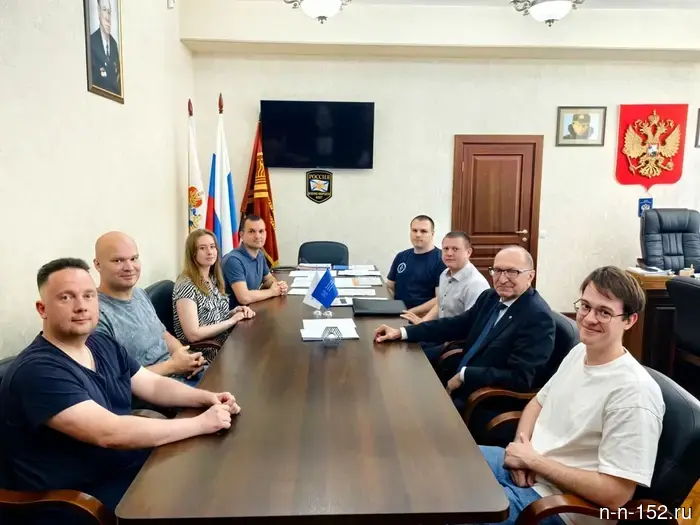
Scientists from NGTU named after R.E. Alekseev have patented a device for reactors of atomic icebreakers.
The new invention by scientists from Nizhny Novgorod State Technical University - the "Spacing and Mixing Grid of the Heat-Releasing Assembly of a Nuclear Power Reactor" - is a structural element responsible for the safe and stable operation of the active zone of a nuclear reactor. The technical solution was developed by nine scientists and engineers from NGTU: Sergey Dmitriev, Tatyana Demkina, Alexander Dobrov, Denis Doronkov, Daniil Kuritsin, Danil Nikolaev, Anton Ryazanov, Alexey Pronin, and Dmitry Solntsev. Inside the nuclear reactor, there are heat-releasing assemblies - bundles of long rods (heat-releasing elements, or fuel rods), in which a nuclear reaction occurs, releasing heat. A coolant flows between these rods, which removes heat for further electricity generation. To ensure that the rods maintain a strictly defined position and do not touch each other, while the coolant evenly washes their surfaces, special grids - spacing and mixing - are used. It is such a grid of improved design that is protected by the obtained patent. The specialists spent more than a year developing the new design. "If there is no grid or it is in poor condition, the rods will start to vibrate, rub against each other, and eventually get damaged. In some places, the liquid will stagnate and overheat. This can lead to an accident: melting of the rods and release of radioactivity. The reactor will have to be urgently stopped," noted one of the authors of the invention, candidate of technical sciences Denis Doronkov. The authors of the patented invention highlight the following key results achieved in the patented design: increased safety (directed transverse flows of the coolant equalize the temperature field in the cross-section of the assembly and prevent the emergence of local overheating zones, which increases the thermal reliability of the active zone); geometric stability (rigid fixation of the heat-releasing elements using spring elements and rigidity angles ensures a stable position of the entire bundle of rods, excluding undesirable vibrations and fretting corrosion); simplification of production and assembly (the use of plates of the same width and thickness, as well as a symmetrical layout of the deflectors significantly reduces the number of unique parts and simplifies the technological process of assembling the grid compared to existing analogs). Unlike the prototype (Eurasian patent EA 041297), which used plates of different widths and an asymmetrical layout of the deflectors, the new design is based on plates of a single configuration. This allowed for a reduction in the number of sizes of parts and eliminated the placement of deflectors in close proximity to the surface of the heat-releasing elements, which previously created a risk of damaging their shell during vibrations. Moreover, the old grids were much more complicated to assemble. The operability of the new grid was tested using computer modeling with the CFD program "LOGOS". Conducting experimental studies is the next step. "From an economic point of view, also considering the number of unique parts, it can be confidently said that the cost reduction in the production of the new grid may exceed ten percent," emphasized Denis Doronkov. Currently, a comprehensive series of laboratory tests has been conducted, and the first prototypes of grids made of plastic and metal have been created. The new grid is planned for use in the active zone of "RITM" type reactors, which are operated on the latest nuclear icebreakers. In addition, the invention can be used at small power nuclear stations and floating nuclear power units. After further refinement of the design, the grid can be applied in large power nuclear reactors (VVER). The invention relates to the field of nuclear technology and is classified according to the International Patent Classification: G21C 3/322, G21C 3/352, G21C 3/356. Patent No. 053629 was issued to Nizhny Novgorod State Technical University named after R.E. Alekseev by the Eurasian Patent Office (EAPO). Application No. 202592110 was submitted on August 13, 2025, and the patent was issued on June 2, 2026. The description of the invention was published in the bulletin of the Eurasian Patent Office "Inventions (Eurasian Applications and Patents)" No. 6 for 2026.
More news about the event:
NGTU has patented a device for nuclear icebreaker reactors. The development of the new design took specialists more than a year. Nizhny Novgorod State Technical University named after R.E. Alekseev 19:13 24.06.2026 Time N - Nizhny Novgorod
Scientists from NGTU named after R.E. Alekseev have patented a device for nuclear icebreaker reactors. The new invention by scientists from Nizhny Novgorod State Technical University - the "Spacing and Mixing Grid of the Heat-Releasing Assembly of a Nuclear Power Reactor" - is a structural element, 17:19 24.06.2026 NGTU - Nizhny Novgorod
Другие Новости Нижнего (Н-Н-152)
 Nizhny Novgorod resident Ilya Baliberdin became the bronze medalist of the World Muay Thai Championship.
Ilya Baliberdin, a student of Nizhny Novgorod Sports School No. 9, became the bronze medalist of the World Muay Thai Championship, which takes place from June 16 to 26 in Malaysia. 24.06.2026. Administration of Nizhny Novgorod. Nizhny Novgorod Region. Nizhny Novgorod.
Nizhny Novgorod resident Ilya Baliberdin became the bronze medalist of the World Muay Thai Championship.
Ilya Baliberdin, a student of Nizhny Novgorod Sports School No. 9, became the bronze medalist of the World Muay Thai Championship, which takes place from June 16 to 26 in Malaysia. 24.06.2026. Administration of Nizhny Novgorod. Nizhny Novgorod Region. Nizhny Novgorod.
 The competition program "Gorky fest" has been announced in Nizhny Novgorod.
The anniversary, tenth festival of new Russian cinema "Gorky fest" will take place in Nizhny Novgorod from July 3 to July 10. 24.06.2026. Nizhny Novgorod Truth. Nizhny Novgorod Region. Nizhny Novgorod.
The competition program "Gorky fest" has been announced in Nizhny Novgorod.
The anniversary, tenth festival of new Russian cinema "Gorky fest" will take place in Nizhny Novgorod from July 3 to July 10. 24.06.2026. Nizhny Novgorod Truth. Nizhny Novgorod Region. Nizhny Novgorod.
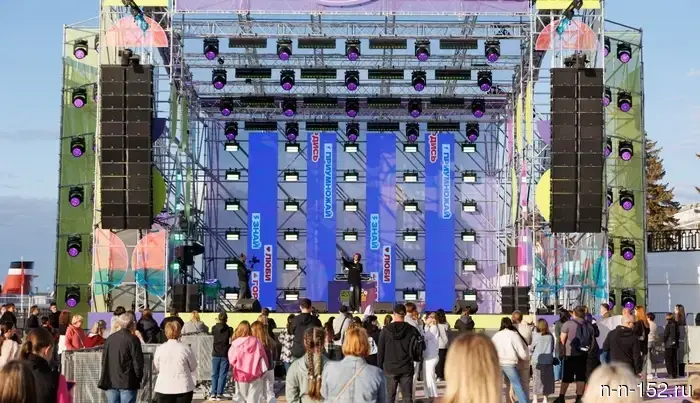 The program for Youth Day in the Nizhny Novgorod region has been published.
The program for the celebration of Youth Day in the Nizhny Novgorod region has been published. 24.06.2026. NTA-Volga. Nizhny Novgorod region. Nizhny Novgorod.
The program for Youth Day in the Nizhny Novgorod region has been published.
The program for the celebration of Youth Day in the Nizhny Novgorod region has been published. 24.06.2026. NTA-Volga. Nizhny Novgorod region. Nizhny Novgorod.
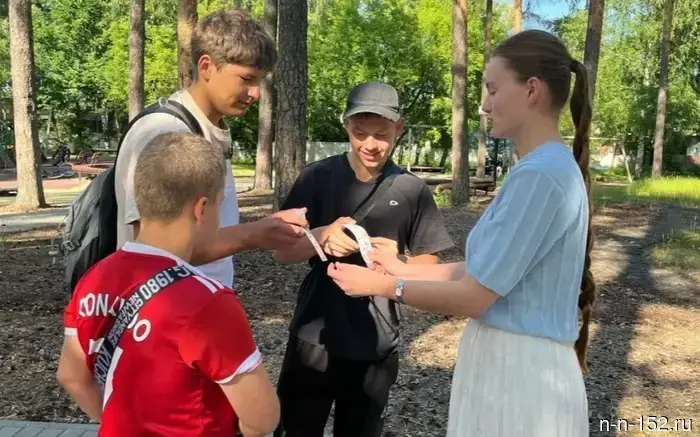 Librarians held an event as part of the All-Russian Anti-Drug Month.
From May 26 to June 26, 2026, a nationwide month of anti-drug activities and promotion of a healthy lifestyle will be held, June 24, 2026. City of Kulebaki. Nizhny Novgorod Region. Kulebaki.
Librarians held an event as part of the All-Russian Anti-Drug Month.
From May 26 to June 26, 2026, a nationwide month of anti-drug activities and promotion of a healthy lifestyle will be held, June 24, 2026. City of Kulebaki. Nizhny Novgorod Region. Kulebaki.
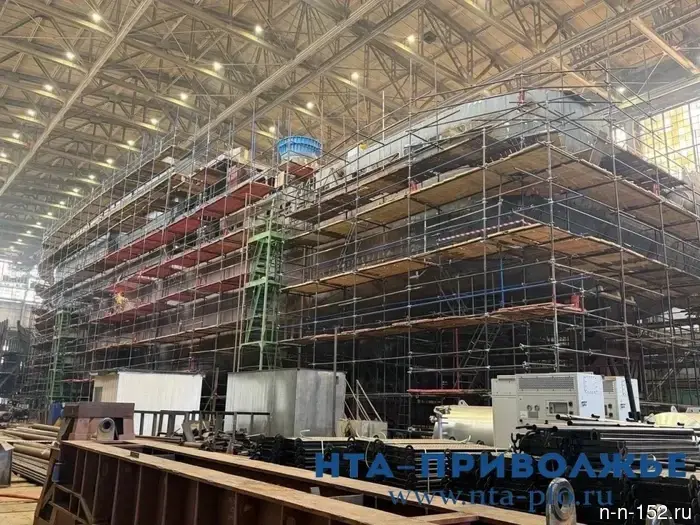 A vessel for the Northern Sea Route is being built in Nizhny Novgorod for 7 billion rubles.
News of Nizhny Novgorod
A vessel for the Northern Sea Route is being built in Nizhny Novgorod for 7 billion rubles.
News of Nizhny Novgorod
 The heist of the century: two bank employees in St. Petersburg stole gold coins worth 2 billion rubles.
News of Nizhny Novgorod
The heist of the century: two bank employees in St. Petersburg stole gold coins worth 2 billion rubles.
News of Nizhny Novgorod
Scientists from NGTU named after R.E. Alekseev have patented a device for reactors of atomic icebreakers.
The new invention by scientists from Nizhny Novgorod State Technical University - "Distance and Mixing Grid of the Heat-Generating Assembly of a Nuclear Power Reactor" - is a structural element, 24.06.2026. NGTU. Nizhny Novgorod Region. Nizhny Novgorod.