

What best reflects Russia in Nizhny Novgorod
Nizhny Novgorod is a city whose history and fate are inextricably intertwined with the history and fate of Russia. In the gray medieval times, this ancient Russian city served as a border fortress, protecting the country's frontiers. During the Time of Troubles, Nizhny played a key role in preserving Russian statehood, becoming the center of the people's militia that liberated Moscow from Polish-Lithuanian invaders. In the 19th century, thanks to the Nizhny Novgorod Fair, the city earned the nickname "the pocket of Russia" and for over a hundred years had a significant impact on the country's economy. In the 20th century, the city of Gorky transformed into a powerful industrial and scientific center, making an invaluable contribution to the Great Victory and the post-war development of the country. Today, Nizhny Novgorod has not lost its energy. It remains a leader in many economic, intellectual, and cultural processes that define modern Russia. Over the centuries, the history of Russia and Nizhny Novgorod has merged into one, leaving its mark in the symbolic space of the city. On the eve of Russia Day, we invited experts to analyze the symbolic space of our city, answering the question: "What place or architectural structure in Nizhny Novgorod would you show to a foreign traveler if they asked you to demonstrate?"
Evgeny Semyonov, Deputy Chairman of the Public Chamber of the Nizhny Novgorod Region, Head of the Nizhny Novgorod Branch of FoRGO, Political Scientist, Candidate of Political Sciences, Associate Professor: Indeed, there are not many cities in Russia, especially ancient ones, whose chronicles are closely intertwined with the main history of the country. Nizhny Novgorod rightfully occupies one of the top places. If we look for symbols of domestic history in the landscape-architectural space of our city, then, of course, the Nizhny Novgorod Kremlin, the Mikhailo-Arkhangelsky Cathedral with the tomb of Kuzma Minin, the Annunciation and Pechersky Ascension Monasteries have every right to be considered Nizhny Novgorod symbols of Russian history. However, a traveler's choice in history, like their preferences, is always subjective. Therefore, for me personally, the symbol of Russian history in Nizhny Novgorod is the Nizhny Novgorod Fair. Without wishing to diminish the symbolic significance of Russian cathedrals, monasteries, and kremlins, I just want to remind that the Nizhny Novgorod Fair exists in a unique and singular embodiment. Its history and contribution to the life of the country are hard to overestimate. The Nizhny Novgorod Fair has been a symbol of national heritage not only for Nizhny Novgorod residents but also for a vast number of compatriots, including those who have never been to Nizhny Novgorod. The symbolic space of modern Russia for me has become the Strelka with its strange, unusual (to say nothing of eclectic) architectural complex, where the giant disc of the "Sovcombank Arena" stadium and the "VOLGA Arena," resembling a giant computer mouse, completely overshadow the once majestic Cathedral of St. Blessed Prince Alexander Nevsky. The symbol of Russia's future in Nizhny Novgorod for me has become the architectural complex of the inter-university IT campus "Neimark." In this case, it is necessary to make a small but important remark. The symbolic capital of "Neimark" is formed not by architectural achievements but by expectations from the results of its work, which can determine a bright future for Russia. We believe that these expectations are not exaggerated because Nizhny has never let Russia down, and this is evidenced by the worthy history of this ancient Russian city.
Andrei Dakhin, Doctor of Sciences, Professor at the Nizhny Novgorod Institute of Management - Branch of RANEPA: Nizhny Novgorod is indeed one of the cities that directly participated in the creation of great Russian history, including as the birthplace of Kuzma Minin in the 17th century, as "the pocket of Russia," and the birthplace of V.G. Shukhov's lace industrial structures in the 19th century, as well as the birthplace of the world's first mass-produced car with a monocoque body (GAZ M-20 "Victory"), the first in the world hydrofoils, and ekranoplans in the 20th century. But it all began with Nizhny Novgorod, which, at the time of its founding, was a fortress city. Therefore, the Nizhny Novgorod Kremlin, picturesque and languidly located on the high bank of the river, is an invaluable symbol of both the Nizhny and Russian cultural-historical space, which should be presented to both foreign and Russian out-of-town tourists. The history of the construction of the fortress walls from the depths of the centuries will lead the tourist to the 20th century when, after the Great Patriotic War, from the late 1950s to the early 1970s, a large-scale reconstruction of the Kremlin took place under the guidance of architect Svyatoslav Leonidovich Agafonov. Thus, through the fate of a specific indigenous Nizhny Novgorod resident, the history of 13th-century architecture is connected with the urban architecture of the early 20th century. The symbol of this invisible connection is not only the restored Nizhny Novgorod Kremlin but also the island of preserved regular wooden shield construction from the Soviet period between Belinsky, Nezvorov, and Tverskaya streets, where the house stands in which S.L. Agafonov lived—a house waiting for its turn to create a full-fledged museum here. The modern city continues to develop, and this new page in the city's history should create new examples of time so that the unique symbolic history of both Nizhny Novgorod and Russia continues.
Elena Mozgunova, Historian, Candidate of Political Sciences, Associate Professor at the Nizhny Novgorod Institute of Management - Branch of RANEPA: On the eve of Russia Day, I want to reflect on those places and meanings of Nizhny land that are closely connected with the history of the country through the prism of "past-present-future." Of course, the heart of the city is the Kremlin, which in ancient times served a protective-defensive function and was never taken by storm. The slopes of the Dyatlovo Mountains and the steep banks of the Volga allowed it to remain a reliable outpost both in ancient times and during the Time of Troubles. At the walls of the Kremlin, Minin and Pozharsky gathered the people's militia, so we can confidently speak of the connection of meanings. On the one hand, the fortress of the city as a symbol of resilience, and on the other hand, in times of crisis, it is not the capital but Nizhny Novgorod that becomes the bastion and defender of sovereignty. The Chkalov Stairs descend from the Kremlin—a memory of the military period of the country and at the same time a path to the origins, the Volga expanses, and the Strelka. As a bridge from the past to the modern period, I will note the Fair—"the pocket of Russia," which connected the eastern and western merchant classes, Europe and Asia. On the banks of the Volga, barges were unloaded with bread, metal, and furs. And here, water is filled with special meaning—the confluence of two rivers as an idea of openness to the world and gathering on one land. After renovation, the Main Fair House and pavilions are a symbol of modern Russia. Here, innovative forums, IT conferences, and meetings of world leaders take place. At the same time, the Nizhny Novgorod Fair is becoming a symbol of Russia's future. When development goes not in isolation but in friendly communication. Speaking of symbols of the future, I also want to draw attention to continuity, where preserving means multiplying. Examples can be the restored funicular (as a tool for attracting tourists) or preserved warehouses (exhibition and concert), which have become a venue for world-class events. Nizhny Novgorod is not a collection of static museums or linear decorations, but a deep, meaningful, and tradition-filled city looking forward, playing a significant role for the country in the past, present, and future.
Andrei Chugunov, Journalist: Choosing something as a nationwide symbol is practically impossible. Probably, the choice will depend on the foreigner themselves: what their interests are and what they know about Nizhny Novgorod. Perhaps it is worth starting from what is known about Nizhny in the world. For example, take them to the Avtozavodsky district, where the world-famous model Natalia Vodianova once traded in a tent. And then take them to the GAZ museum to see the "Volgas" and "Chaikas." Here are two symbols for you: Vodianova as an example of successful realization of potential and cars as signs of the era of not very developed socialism. If the foreigner is politically literate, then the names Sakharov and Nemtsov will tell them a lot. If they are not alien to culture, then the names of Gorky, Shalyapin, or, for example, Roerich and Kuztodiyev will not be empty sounds for them. And there are plenty of objects and spaces associated with them. And even if they only know about Russia from vodka
Другие Новости Нижнего (Н-Н-152)
 The tourist tax brought 31.2 million rubles to Nizhny Novgorod.
News of Nizhny Novgorod
The tourist tax brought 31.2 million rubles to Nizhny Novgorod.
News of Nizhny Novgorod
 On free legal consultation
In order to provide legal assistance to the population at the reception of citizens of the Governor and Government of the Nizhny Novgorod region (hereinafter referred to as the Reception of Citizens) at the address: Nizhny Novgorod, June 11, 2026. Pochinkovsky municipal district. Nizhny Novgorod region. Pochinki.
On free legal consultation
In order to provide legal assistance to the population at the reception of citizens of the Governor and Government of the Nizhny Novgorod region (hereinafter referred to as the Reception of Citizens) at the address: Nizhny Novgorod, June 11, 2026. Pochinkovsky municipal district. Nizhny Novgorod region. Pochinki.
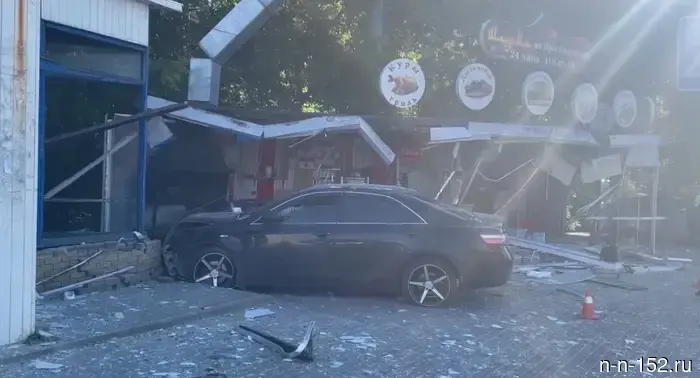 A foreign car crashed into a shawarma kiosk in Nizhny Novgorod: Rostrud has started an inspection.
News of Nizhny Novgorod
The delivery of a large batch of communication equipment was intercepted in Nizhny Novgorod IK-14.
The delivery of a large batch of communication devices was intercepted in Nizhny Novgorod IK-14.
As reported by the press service of the Federal Penitentiary Service of Russia for the Nizhny Novgorod region, 11.06.2026. NTA-Volga. Nizhny Novgorod region. Nizhny Novgorod.
A foreign car crashed into a shawarma kiosk in Nizhny Novgorod: Rostrud has started an inspection.
News of Nizhny Novgorod
The delivery of a large batch of communication equipment was intercepted in Nizhny Novgorod IK-14.
The delivery of a large batch of communication devices was intercepted in Nizhny Novgorod IK-14.
As reported by the press service of the Federal Penitentiary Service of Russia for the Nizhny Novgorod region, 11.06.2026. NTA-Volga. Nizhny Novgorod region. Nizhny Novgorod.
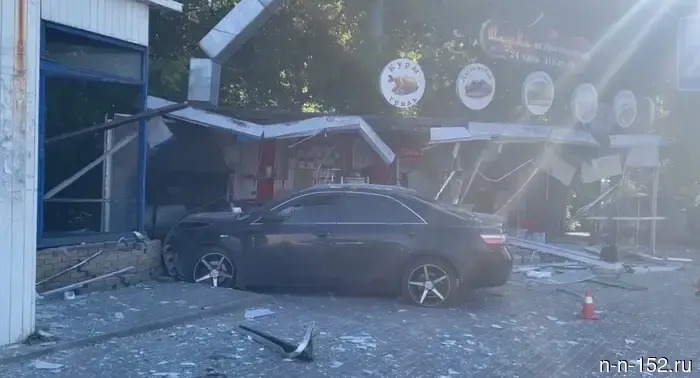 A foreign car crashed into a shawarma stall in Nizhny Novgorod: Rostrud has started an inspection.
News of Nizhny Novgorod
A foreign car crashed into a shawarma stall in Nizhny Novgorod: Rostrud has started an inspection.
News of Nizhny Novgorod
 June 14 is celebrated as World Blood Donor Day.
Every year on June 14, World Blood Donor Day is celebrated. The very word "donor" comes from the Latin "danare" – to give, because often donors give others not only blood but also life. 06.11.2026. City of Kulebaki. Nizhny Novgorod Region. Kulebaki.
June 14 is celebrated as World Blood Donor Day.
Every year on June 14, World Blood Donor Day is celebrated. The very word "donor" comes from the Latin "danare" – to give, because often donors give others not only blood but also life. 06.11.2026. City of Kulebaki. Nizhny Novgorod Region. Kulebaki.
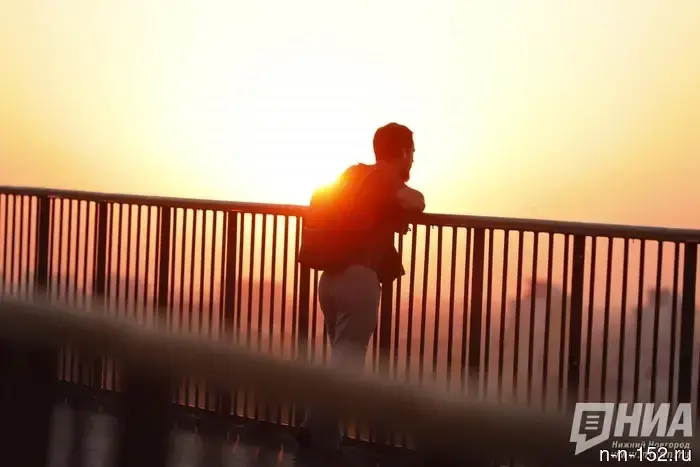
What best reflects Russia in Nizhny Novgorod
Nizhny Novgorod is a city whose history and fate are inextricably intertwined with the history and fate of Russia. 11.06.2026. NIA Nizhny Novgorod. Nizhny Novgorod Region. Nizhny Novgorod.